Message Board

Respected readers, authors and reviewers, you can add comments to this page on any questions about the contribution, review,        editing and publication of this journal. We will give you an answer as soon as possible. Thank you for your support!

Name
E-mail
Phone
Title
Content
Verification Code
Turn off MathJax
Article Contents

CHEN Fangjian, ZHANG Yumei, WU Wenyan, ZHOU Yuqin, ZHANG Yang. Exploring the molecular mechanism of Citri Grandis Exocarpium in relieving cough and resolving phlegm based on network pharmacology and molecular docking[J]. Journal of Pharmaceutical Practice and Service. doi: 10.12206/j.issn.2097-2024.202604056
Citation: CHEN Fangjian, ZHANG Yumei, WU Wenyan, ZHOU Yuqin, ZHANG Yang. Exploring the molecular mechanism of Citri Grandis Exocarpium in relieving cough and resolving phlegm based on network pharmacology and molecular docking[J]. Journal of Pharmaceutical Practice and Service. doi: 10.12206/j.issn.2097-2024.202604056

Exploring the molecular mechanism of Citri Grandis Exocarpium in relieving cough and resolving phlegm based on network pharmacology and molecular docking

doi: 10.12206/j.issn.2097-2024.202604056
  • Received Date: 2026-04-22
  • Accepted Date: 2026-06-23
  • Rev Recd Date: 2026-05-19
  •   Objective  To analyze the molecular mechanism of Citri Grandis Exocarpium (Huajuhong) in relieving cough and resolving phlegm based on network pharmacology and molecular docking technology.   Methods  The active ingredients of Citri Grandis Exocarpium were retrieved from the TCMSP. The targets of these active ingredients were predicted via the PubChem database and SwissTargetPrediction platform. Targets associated with cough and phlegm syndrome were obtained from the GeneCards and DisGeNET databases, and the intersection targets were acquired using a Venn diagram. The PPI network of the targets was constructed with the STRING 12.0 database. Core targets were screened out for GO functional enrichment analysis and KEGG signaling pathway enrichment analysis. The “active ingredient-core target-pathway” network was established by Cytoscape 3.10.4, and molecular docking validation was performed on the CB-DUCK2 online platform. Human bronchial epithelial BEAS-2B cells were cultured in vitro. Cell viability was detected by the CCK-8 assay, and the mRNA expression levels of AKT1, BCL2 and EGFR were determined by qPCR.   Results  10 active ingredients of Citri Grandis Exocarpium were screened, with 390 corresponding action targets and 214 intersection targets related to cough and phlegm syndrome. 10 core targets were identified, including GAPDH, AKT1, EGFR, BCL2, CASP3, SRC, ESR1, PTGS2, MMP-9, and CCND1. GO analysis and KEGG showed that these targets were involved in biological processes such as negativing regulation of intrinsic apoptotic signaling pathway, responding to UV-A and exogenous stimuli; were localized in cellular components including protein-containing complexes, nuclear envelope and cytosol; and participated in molecular functions such as enzyme binding, protein kinase activity and identical protein binding. The targets mainly regulated signaling pathways including the Estrogen signaling pathway, HIF-1 signaling pathway, and TNF signaling pathway. Molecular docking results indicated that the active ingredients of Citri Grandis Exocarpium had favorable binding affinity with the core targets GAPDH, AKT1, EGFR and BCL2. In vitro cell experimental results showed that Citri Grandis Exocarpium extract significantly increased cell viability (P<0.05), downregulated the expression level of AKT1, upregulated the expression level of BCL2P<0.05), and decreased the expression level of EGFR.   Conclusion   Citri Grandis Exocarpium exerted cough-relieving and phlegm-resolving effects possibly through a multi-ingredient, multi-target and multi-pathway mode.
  • [1] NAQVI K F, MAZZONE S B, SHILOH M U. Infectious and inflammatory pathways to cough[J]. Annu Rev Physiol, 2023, 85: 71-91. doi:  10.1146/annurev-physiol-031422-092315
    [2] 中华医学会呼吸病学分会哮喘学组. 咳嗽的诊断与治疗指南(2021)[J]. 中华结核和呼吸杂志, 2022, 45(1): 13-46.
    [3] 国家药典委员会. 中华人民共和国药典: 一部[S]. 北京: 中国医药科技出版社, 2020: 125.
    [4] WU G Y, WEI X Q, LI D M, et al. Selection and evaluation of quality markers for the regulation of PXR-CYP3A4/FXR-LXRα by Exocarpium Citri Grandis for the treatment of hyperlipidaemia with dispelling blood stasis and removing phlegm[J]. Biomed Pharmacother, 2024, 170: 116089. doi:  10.1016/j.biopha.2023.116089
    [5] CHEN T T, WU X Q, WANG D N, et al. Exocarpium citri grandis ameliorates metabolic disorders by inhibiting inflammatory responses and NLRP3 inflammasome activation[J]. Food Sci Nutr, 2025, 13(11): e71074. doi:  10.1002/fsn3.71074
    [6] ZHU X T, LI J, XIAO G S, et al. Key metabolic pathways of the aging process of Citri Grandis Exocarpium and its identified potential metabolites associated with antioxidant activity[J]. npj Sci Food, 2025, 9: 57. doi:  10.1038/s41538-025-00411-0
    [7] CHEN J, QIN X, CHEN M Y, et al. Biological activities, Molecular mechanisms, and Clinical application of Naringin in Metabolic syndrome[J]. Pharmacol Res, 2024, 202: 107124. doi:  10.1016/j.phrs.2024.107124
    [8] ZHAO X Y, XIU J, YANG H Z, et al. Network pharmacology and bioinformatics study of six medicinal food homologous plants against colorectal cancer[J]. Int J Mol Sci, 2025, 26(3): 930. doi:  10.3390/ijms26030930
    [9] TANG D D, CHEN M J, HUANG X H, et al. SRplot: a free online platform for data visualization and graphing[J]. PLoS One, 2023, 18(11): e0294236. doi:  10.1371/journal.pone.0294236
    [10] LIU Y, YANG X C, GAN J H, et al. CB-Dock2: improved protein–ligand blind docking by integrating cavity detection, docking and homologous template fitting[J]. Nucleic Acids Res, 2022, 50(W1): W159-W164. doi:  10.1093/nar/gkac394
    [11] 孙增涛, 师艺航, 李小娟. 咳嗽中医诊疗专家共识意见(2021)[J]. 中医杂志, 2021, 62(16): 1465-1472.
    [12] 张瑜, 吴国珍. 橘红痰咳液治疗外感风寒(或夹湿)型咳嗽疗效观察[J]. 世界科学技术-中医药现代化, 2017, 19(6): 1026-1030.
    [13] HUA F Z, YING J, ZHANG J, et al. Naringenin pre-treatment inhibits neuroapoptosis and ameliorates cognitive impairment in rats exposed to isoflurane anesthesia by regulating the PI3/Akt/PTEN signalling pathway and suppressing NF-κB-mediated inflammation[J]. Int J Mol Med, 2016, 38(4): 1271-1280. doi:  10.3892/ijmm.2016.2715
    [14] WANG Q Y, OU Y J, HU G M, et al. Naringenin attenuates non-alcoholic fatty liver disease by down-regulating the NLRP3/NF-κB pathway in mice[J]. Br J Pharmacol, 2020, 177(8): 1806-1821. doi:  10.1111/bph.14938
    [15] KANG G D, KIM D H. Poncirin and its metabolite ponciretin attenuate colitis in mice by inhibiting LPS binding on TLR4 of macrophages and correcting Th17/Treg imbalance[J]. J Ethnopharmacol, 2016, 189: 175-185. doi:  10.1016/j.jep.2016.05.044
    [16] CHEN S, WANG X J, CHENG Y, et al. A review of classification, biosynthesis, biological activities and potential applications of flavonoids[J]. Molecules, 2023, 28(13): 4982. doi:  10.3390/molecules28134982
    [17] ATILA USLU G, USLU H, ÇOBAN T A, et al. Nobiletin reduces 5-FU-induced lung injury with antioxidative, anti-inflammatory and anti-apoptotic activities[J]. Naunyn Schmiedeberg’s Arch Pharmacol, 2025, 398(7): 8543-8554. doi:  10.1007/s00210-024-03773-6
    [18] HE D X, WANG S Q, FANG G F, et al. LXRs/ABCA1 activation contribute to the anti-inflammatory role of phytosterols on LPS-induced acute lung injury[J]. J Funct Foods, 2022, 89: 104966. doi:  10.1016/j.jff.2022.104966
    [19] KAN S A. β-sitosterol suppresses fibroblast growth factor and epidermal growth factor receptors to induce apoptosis and inhibit migration in lung cancer: an in vitro study[J]. Am J Cancer Res, 2025, 15(3): 1109-1121. doi:  10.62347/nzcg1179
    [20] LIU J H, YAO J D, ZHANG J. Naringenin attenuates inflammation in chronic obstructive pulmonary disease in cigarette smoke induced mouse model and involves suppression of NF-κB[J]. J Microbiol Biotechnol, 2018. DOI: 10.4014/jmb.1810.10061.
    [21] XU J F, YANG L, LIN T T. β-sitosterol targets glucocorticoid receptor to reduce airway inflammation and remodeling in allergic asthma[J]. Pulm Pharmacol Ther, 2023, 78: 102183. doi:  10.1016/j.pupt.2022.102183
    [22] WANG K, LI J Z, ZHANG H, et al. Tobacco smoking rewires cell metabolism by inducing GAPDH succinylation to promote lung cancer progression[J]. Cancer Res, 2025, 85(15): 2838-2857. doi:  10.1158/0008-5472.CAN-24-3525
    [23] NIE Y J, HU Y D, YU K K, et al. Akt1 regulates pulmonary fibrosis via modulating IL-13 expression in macrophages[J]. Innate Immun, 2019, 25(7): 451-461. doi:  10.1177/1753425919861774
    [24] SCHRAMM F, SCHAEFER L, WYGRECKA M. EGFR signaling in lung fibrosis[J]. Cells, 2022, 11(6): 986. doi:  10.3390/cells11060986
    [25] HE Y C, LI F, ZHANG C, et al. Therapeutic effects of the bcl-2 inhibitor on bleomycin-induced pulmonary fibrosis in mice[J]. Front Mol Biosci, 2021, 8: 645846. doi:  10.3389/fmolb.2021.645846
    [26] YANG Z, KAO X Y, ZHANG L, et al. Exploring the anti-PANoptosis mechanism of dachaihu decoction against sepsis-induced acute lung injury: network pharmacology, bioinformatics, and experimental validation[J]. Drug Des Dev Ther, 2025, 19: 349-368. doi:  10.2147/DDDT.S495225
    [27] LIU S Q, HU C P, LI M, et al. Estrogen receptor beta promotes lung cancer invasion via increasing CXCR4 expression[J]. Cell Death Dis, 2022, 13: 70. doi:  10.1038/s41419-022-04514-4
    [28] SATHISH V, FREEMAN M R, LONG E, et al. Cigarette smoke and estrogen signaling in human airway smooth muscle[J]. Cell Physiol Biochem, 2015, 36(3): 1101-1115. doi:  10.1164/ajrccm-conference.2010.181.1_meetingabstracts.a3605
    [29] MCCLENDON J, JANSING N L, REDENTE E F, et al. Hypoxia-inducible factor 1α signaling promotes repair of the alveolar epithelium after acute lung injury[J]. Am J Pathol, 2017, 187(8): 1772-1786. doi:  10.1016/j.ajpath.2017.04.012
    [30] LU Y, WU Y, HUANG M F, et al. Fuzhengjiedu formula exerts protective effect against LPS-induced acute lung injury via gut-lung axis[J]. Phytomedicine, 2024, 123: 155190. doi:  10.1016/j.phymed.2023.155190
  • 加载中
通讯作者: 陈斌, bchen63@163.com
  • 1. 

    沈阳化工大学材料科学与工程学院 沈阳 110142

  1. 本站搜索
  2. 百度学术搜索
  3. 万方数据库搜索
  4. CNKI搜索

Figures(11)  / Tables(3)

Article Metrics

Article views(21) PDF downloads(0) Cited by()

Related
Proportional views

Exploring the molecular mechanism of Citri Grandis Exocarpium in relieving cough and resolving phlegm based on network pharmacology and molecular docking

doi: 10.12206/j.issn.2097-2024.202604056

Abstract:   Objective  To analyze the molecular mechanism of Citri Grandis Exocarpium (Huajuhong) in relieving cough and resolving phlegm based on network pharmacology and molecular docking technology.   Methods  The active ingredients of Citri Grandis Exocarpium were retrieved from the TCMSP. The targets of these active ingredients were predicted via the PubChem database and SwissTargetPrediction platform. Targets associated with cough and phlegm syndrome were obtained from the GeneCards and DisGeNET databases, and the intersection targets were acquired using a Venn diagram. The PPI network of the targets was constructed with the STRING 12.0 database. Core targets were screened out for GO functional enrichment analysis and KEGG signaling pathway enrichment analysis. The “active ingredient-core target-pathway” network was established by Cytoscape 3.10.4, and molecular docking validation was performed on the CB-DUCK2 online platform. Human bronchial epithelial BEAS-2B cells were cultured in vitro. Cell viability was detected by the CCK-8 assay, and the mRNA expression levels of AKT1, BCL2 and EGFR were determined by qPCR.   Results  10 active ingredients of Citri Grandis Exocarpium were screened, with 390 corresponding action targets and 214 intersection targets related to cough and phlegm syndrome. 10 core targets were identified, including GAPDH, AKT1, EGFR, BCL2, CASP3, SRC, ESR1, PTGS2, MMP-9, and CCND1. GO analysis and KEGG showed that these targets were involved in biological processes such as negativing regulation of intrinsic apoptotic signaling pathway, responding to UV-A and exogenous stimuli; were localized in cellular components including protein-containing complexes, nuclear envelope and cytosol; and participated in molecular functions such as enzyme binding, protein kinase activity and identical protein binding. The targets mainly regulated signaling pathways including the Estrogen signaling pathway, HIF-1 signaling pathway, and TNF signaling pathway. Molecular docking results indicated that the active ingredients of Citri Grandis Exocarpium had favorable binding affinity with the core targets GAPDH, AKT1, EGFR and BCL2. In vitro cell experimental results showed that Citri Grandis Exocarpium extract significantly increased cell viability (P<0.05), downregulated the expression level of AKT1, upregulated the expression level of BCL2P<0.05), and decreased the expression level of EGFR.   Conclusion   Citri Grandis Exocarpium exerted cough-relieving and phlegm-resolving effects possibly through a multi-ingredient, multi-target and multi-pathway mode.

CHEN Fangjian, ZHANG Yumei, WU Wenyan, ZHOU Yuqin, ZHANG Yang. Exploring the molecular mechanism of Citri Grandis Exocarpium in relieving cough and resolving phlegm based on network pharmacology and molecular docking[J]. Journal of Pharmaceutical Practice and Service. doi: 10.12206/j.issn.2097-2024.202604056
Citation: CHEN Fangjian, ZHANG Yumei, WU Wenyan, ZHOU Yuqin, ZHANG Yang. Exploring the molecular mechanism of Citri Grandis Exocarpium in relieving cough and resolving phlegm based on network pharmacology and molecular docking[J]. Journal of Pharmaceutical Practice and Service. doi: 10.12206/j.issn.2097-2024.202604056
  • 咳嗽是对呼吸道刺激的基本生理过程,有助于清除呼吸道的刺激物和多余的黏液,但频繁的咳嗽严重影响患者日常生活,对患者健康造成危害[1]。目前临床常用的对症治疗药物主要有中枢镇咳药、外周镇咳药和祛痰药,虽然有较强镇咳作用,但具有成瘾性,只能起到短暂缓解症状的作用,大部分患者症状反复,严重影响生活质量,还可能进一步发展为慢性阻塞性肺疾病等[2]。因此,探索安全有效的药物对咳嗽患者的治疗具有重要意义。中医学认为肺失宣降,肺气上逆而作咳嗽,中医中药对咳嗽辨证论治,通过多环节、多靶点发挥效应治疗咳嗽,临床常以疏风、宣肺、降浊化痰为主进行治疗,同时标本兼治,对肝脾肾进行调治[2]

    化橘红(Citrus grandis ‘Tomentosa)是芸香科植物化州柚的未成熟或近成熟的干燥外层果皮,为我国十大广药之一,化橘红味苦性温,归肺、脾经,具有理气宽中,燥湿化痰作用,常用于治疗气喘、咳嗽痰多、呕恶痞闷[3-4]。已有研究显示,化橘红含有类黄酮、挥发油、香豆素等多种具有抗炎、抗氧化等多重作用的化学成分,具有止咳、祛痰等多种药理作用[5-7]。然而化橘红止咳化痰具体分子机制尚未阐明。网络药理学通过构建“多成分-多靶点-多通路”网络,探索中药复方协同作用、完善中药单体多靶点协同机制,其整体性的分析特点与中药多成分、多靶点的作用机制相契合,是分析中药效果的重要方式[8]。为进一步研究化橘红止咳化痰分子机制,本研究利用网络药理学和分子对接技术,预测化橘红止咳化痰的活性成分及潜在作用机制,并进行了细胞实验验证,为其临床应用与开发提供理论依据。

    • 人支气管上皮BEAS-2B细胞(批号26020C03),购自苏州海星生物科技有限公司。

    • 化橘红饮片(批号251000201)、AMG9810(批号F28IB208092)、亚硫酸氢钠(批号K18WA7001)、无水亚硫酸钠(批号L822BA10005)、RNA Easy Fast动物组织/细胞总RNA提取试剂盒(批号B0109A)、UniPeak U+ One Step RT-qPCR SYBR Green Kit(批号7E0321D5)、CCK8试剂(批号2894240801)。

    • CFX Opus 96型qPCR仪(美国BIO-RAD公司)、5425R型低温离心机(德国艾本德公司)、311型培养箱(美国赛默飞世尔科技公司)。

    • 在中药系统药理学平台(TCMSP,https://tcmsp-e.com/index.php),以“化橘红”为关键词进行检索,以口服生物利用度(oral bioavailability,OB)≥30%且类药性(drug-likeness,DL)≥0.18为筛选标准,初步筛选出具有化橘红的活性成分和靶点。通过PubChem数据库(https://pubchem.ncbi.nlm.nih.gov)检索上述活性成分结构的Canonical SMILES序列及2D结构,并将Canonical SMILES序列输入SwissTargetPrediction平台(http://www.swisstargetprediction.ch),进行化橘红活性成分靶点预测,经合并冗余及去重处理后,得到化橘红的最终靶点蛋白集合。

    • 以“咳嗽”(cough)、“痰证”(phlegm)为检索词,分别从GeneCards数据库(https://www.genecards.org)及DisGeNET数据库(https://www.disgenet.org)中挖掘与疾病相关的靶点基因。获取的靶点蛋白中,Score值越高则代表该靶点与疾病联系密切,设定Score值大于中位数的目标靶点为咳嗽、痰症相关的潜在靶点,对两数据库获取的靶点进行整合与去重后,得到咳嗽、痰症相关靶点。

    • 为探究化橘红相关靶点与咳嗽、痰症靶点间的相互作用,利用微生信在线平台(https://www.bioinformatics.com.cn)韦恩图[9]可视化分析化橘红活性成分靶点与咳嗽、痰证相关靶点的重叠关系,二者的交集靶点即为化橘红干预疾病的潜在靶点,并绘制韦恩图。

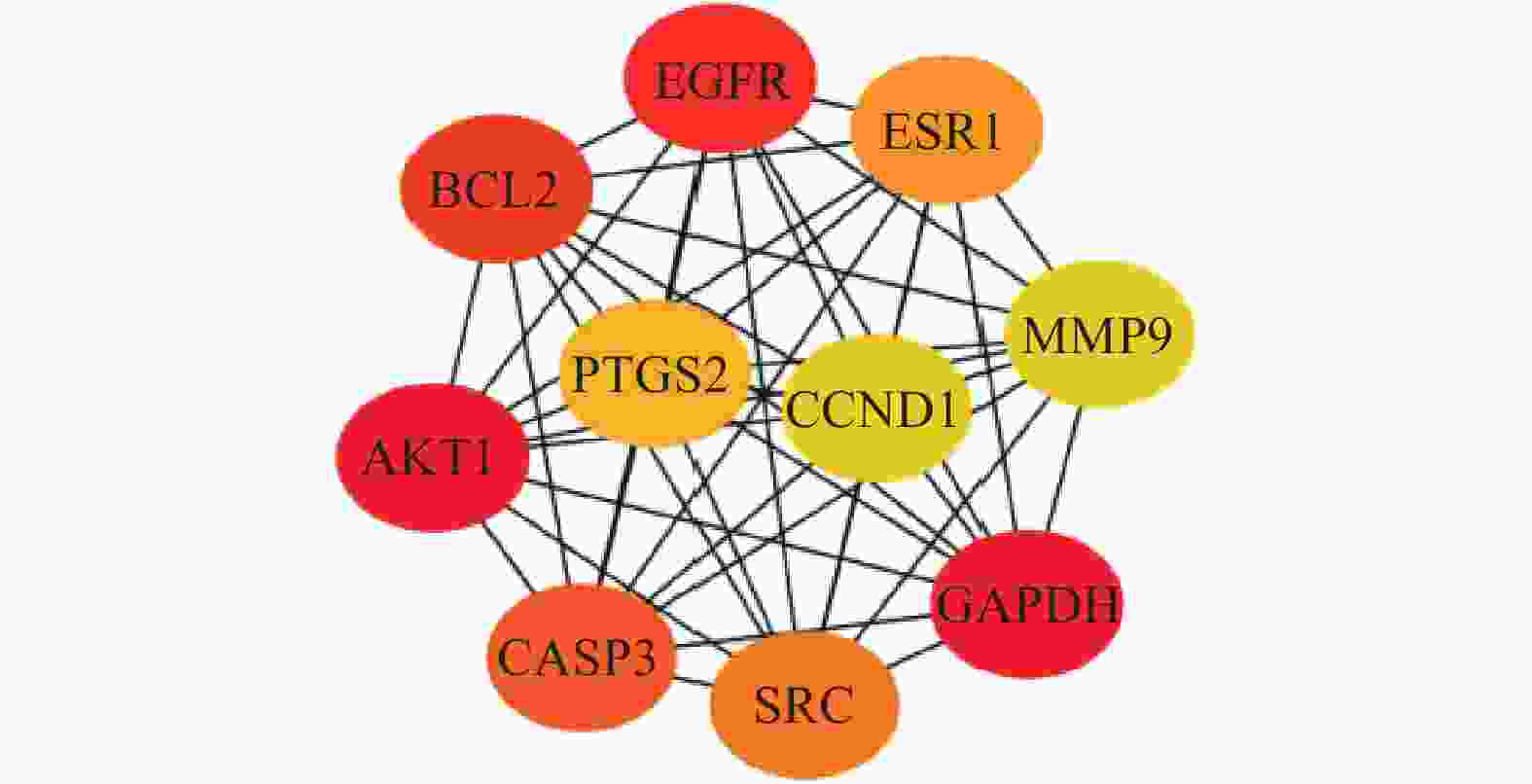
    • 将交集靶点导入STRING 12.0数据库(https://string-db.org/),设置物种为“Homo sapiens”并采用默认参数(中等置信度阈值0.4),构建共有靶点蛋白质-蛋白质相互作用(protein-protein interaction,PPI)网络图,保存为“tsv”文件。随后将网络数据导入Cytoscape 3.10.4软件,利用其内置CytoHubba插件进行拓扑学分析,基于节点度值(Degree)筛选排名前10的核心靶点基因。网络图中节点颜色深浅反映靶点重要性程度,颜色越深表明该靶点在网络中具有更高的连接丰富性。

    • 将筛选得到的核心靶点上传至DAVID数据库(https:/http://david.ncifcrf.gov),并设定为“Homo sapines”属性,开展基因本体论(gene ontology,GO)功能富集分析和京都基因与基因组百科全书(Kyoto encyclopedia of genes and genomes, KEGG)信号通路富集分析(P<0.05),解析核心靶点涉及的生物功能及信号通路。

    • 运用Cytoscape 3.10.4软件整合活性成分与10个核心靶点关联关系及核心靶点-信号通路映射关系,构建多层级互作网络模型,直观展示化橘红止咳化痰的物质基础与作用途径。

    • 从RCSB蛋白数据库(https://www.rcsb.org)获取核心靶点蛋白排序居前4位的X射线晶体结构。利用Yang Cao Lab(http://cao.labshare.cn/clab/index.html)CB-Dock2在线平台进行分子对接,按照平台的操作流程对活性成分与前4位的核心靶点蛋白进行分子对接模拟[10]

    • 取适量化橘红中药饮片加水浸泡1 h,然后使用文火煎煮2次,每次1 h;合并两次的水煎液,用双层纱布过滤;浓缩滤液至终浓度为1 g/ml。为保证药液无菌,将浓缩后的滤液密封后置于烧杯中,烧杯加水,置于微波炉中煮沸15 min灭菌。药液4℃保存待用。

    • BEAS-2B细胞以每孔3×10⁴个的密度接种于96孔板,每孔注入100 μl培养液,于37℃、5 %细胞培养箱孵育过夜。分别加入100 μl不同浓度(300、100、33.3、11.1、3.7、1.2、0.4、0.14 μmol/L)SO2衍生物。培养24 h后取出细胞培养板,每孔加入10 μl的CCK-8溶液,在细胞培养箱中放置1 h,用酶标仪检测450 nm波长下吸光度(A)。

    • BEAS-2B细胞以每孔3×10⁴个的密度接种于96孔板,孵育过夜。分别加入不同浓度化橘红提取物(10、1 mg/ml和100、50、20、10、5、2.5、1、0.5 μg/ml)、AMG9810(100、80、60、40、20、15、10、7.5 μmol/L)。培养24 h后取出细胞培养板,CCK8法测定细胞存活率。

    • BEAS-2B细胞以每孔1.5×10⁴个的密度接种于96孔板,每孔注入100 μl培养液,于37℃、5 %细胞培养箱孵育过夜。分别加入4 μmol/L SO2衍生物、不同浓度化橘红提取物(10 mg/ml和100、1 μg/ml)、AMG9810(100、50、5 μmol/L),培养24 h后取出细胞培养板,CCK8法测定细胞存活率。

    • BEAS-2B细胞培养24 h后进行分组。实验分为:对照组、模型组(含4 μmol/L SO2衍生物)、阳性组(AMG9810 100 μmol/L和4 μmol/L SO2衍生物)、化橘红提取物组(10 mg/ml化橘红提取物和4 μmol/LSO2衍生物)。

    • BEAS-2B细胞以每孔1×10⁶个的密度接种于6孔板,按照“2.2.5”项下方法分组、给药,培养24 h后按照总RNA提取试剂说明书要求提取总RNA,测定浓度,去除DNA。对各样本进行qPCR扩增反应。扩增条件为:50℃,5 min,95℃×30 s,95℃×10 s,60℃×30 s,共40个循环。使用2−ΔΔCt方法计算各基因相对表达量。引物序列见表1

      基因名称 上游引物 下游引物
      BCL2 TTTCGGTGACTTCC
      GCATCA
      CGGTCTCCTAAAAGCAGGCA
      AKT1 AGAGCAAACGGGG
      CCATC
      CCAGGTCTTGATGTACTCCCC
      EGFR GCCCAGACCGGAC
      GACAG
      CCAACTGCGTGAGCTTGTTAC
      β-actin ACCTAACTTGCGC
      AGAAAACA
      TTGTGAACTTTGGGGGATGCT
    • 通过Graphpad Prism 10.2.0软件进行处理,数据以(±s)表示,组间比较采用单因素方差分析。P<0.05表示差异具有统计学意义。

    • 在TCMSP数据库检索化橘红,得到化橘红化学成分44个。以OB≥30%和DL≥0.18为标准进行筛选,共获得10个活性成分,见表2

      序号化合物编号化合物名称口服生物利用度类药性化学式
      1MOL013276Poncirin36.550.74C28H34O14
      2MOL001798Neohesperidin_qt71.170.27C16H14O6
      3MOL004328Naringenin59.290.21C15H12O5
      4MOL005849Didymin38.550.24C16H14O5
      5MOL0132795,7,4'-Trimethylapigenin39.830.3C18H16O5
      6MOL005828Nobiletin61.670.52C21H22O8
      7MOL001803Sinensetin50.560.45C20H20O7
      8MOL013277Isosinensetin51.150.44C20H20O7
      9MOL000358β-sitosterol36.910.75C29H50O
      10MOL010267LYC32.570.51C40H56
    • 利用SwissTargetPrediction数据库收集化橘红活性成分作用靶点,并删除重复靶点,通过Uniprot数据库与获取的靶点基因匹配后,获得化橘红活性成分靶点390个。

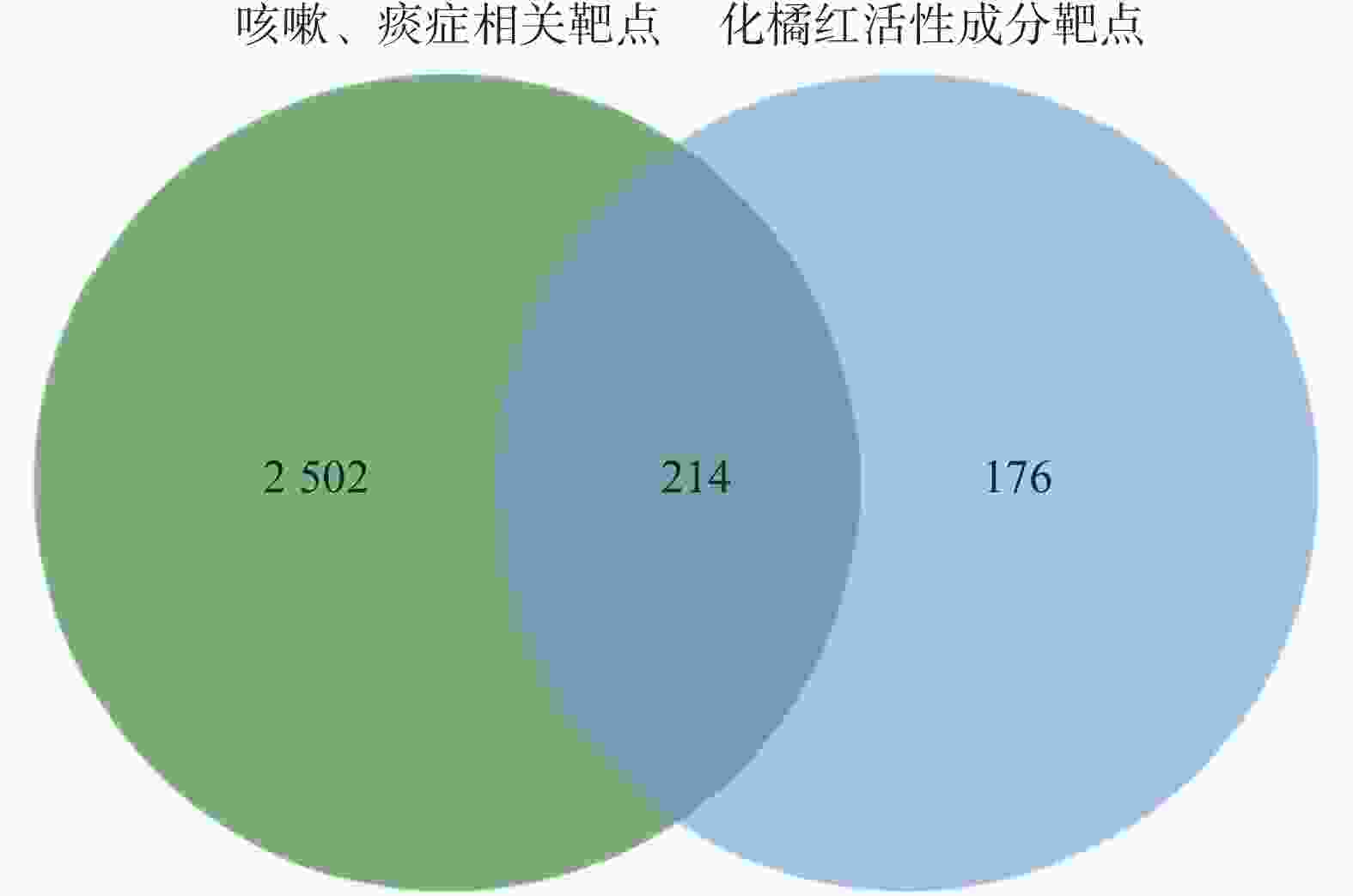
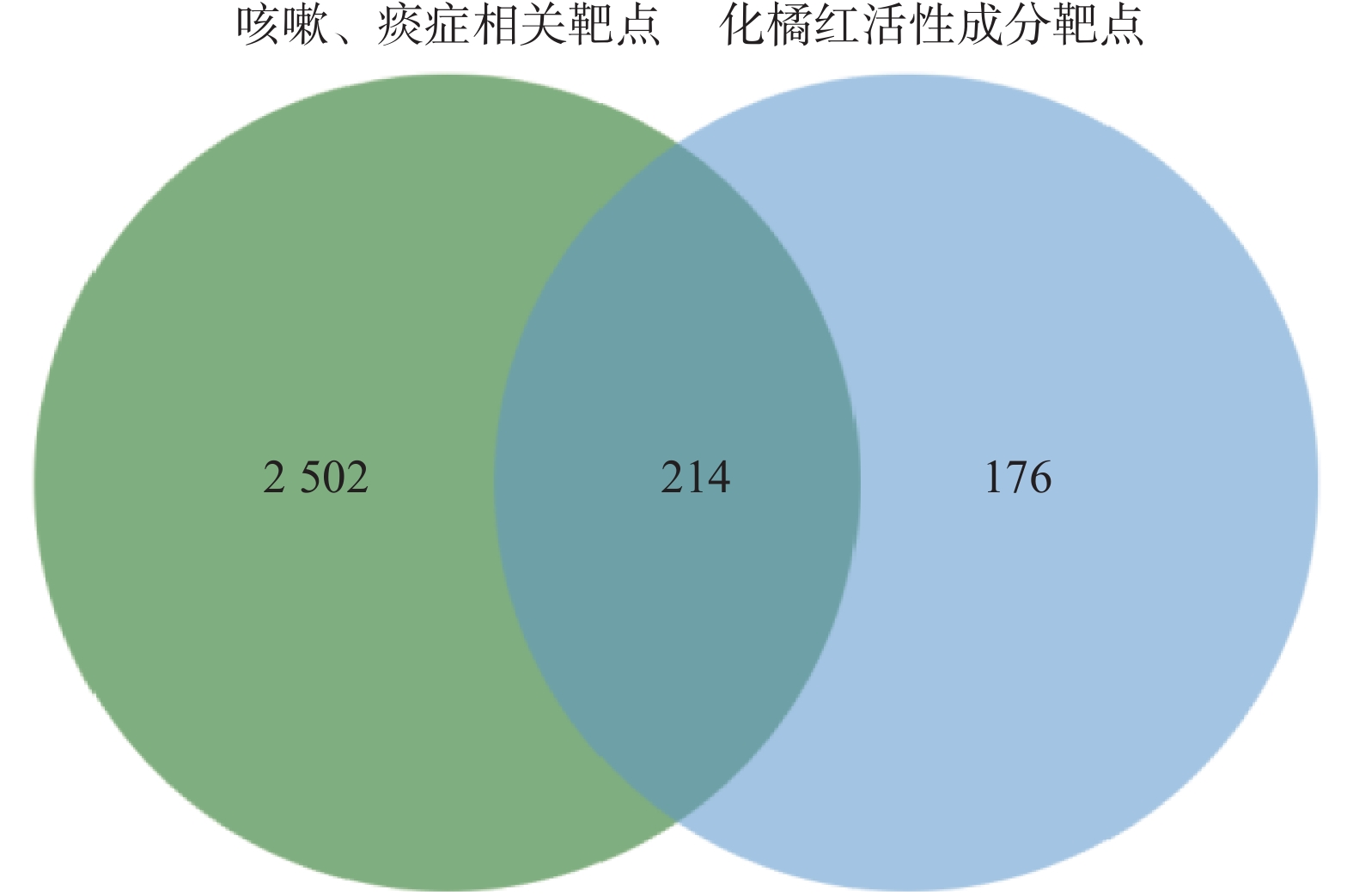
    • 以“cough”、“phlegm”为关键词,分别检索GeneCards数据库、DisGeNET数据库,在合并、删除重复靶点后,共获取疾病相关基因2 716个。与化橘红活性成分靶点作韦恩图进行交集分析,初步收集化橘红止咳化痰潜在作用靶点214个,见图1

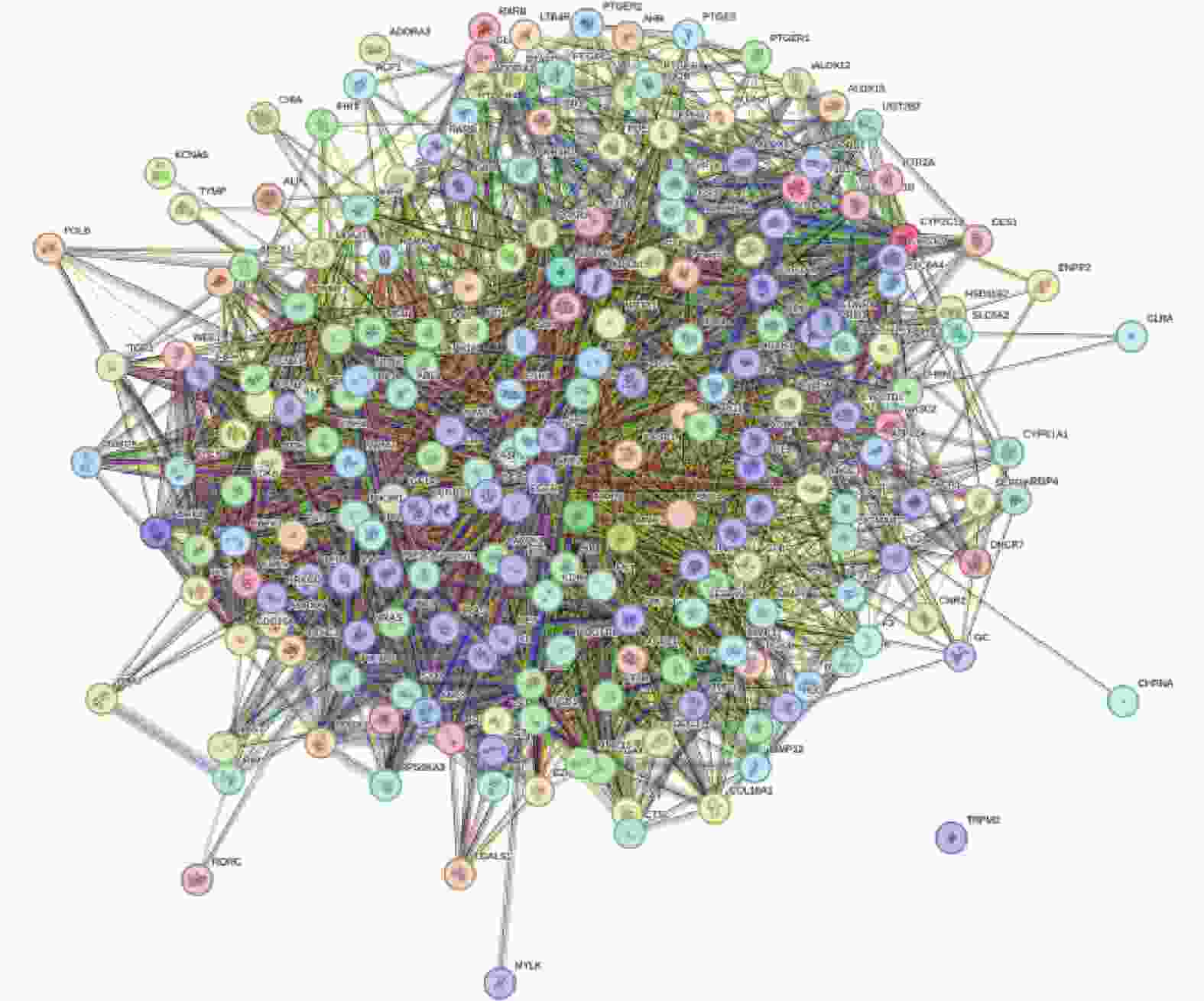
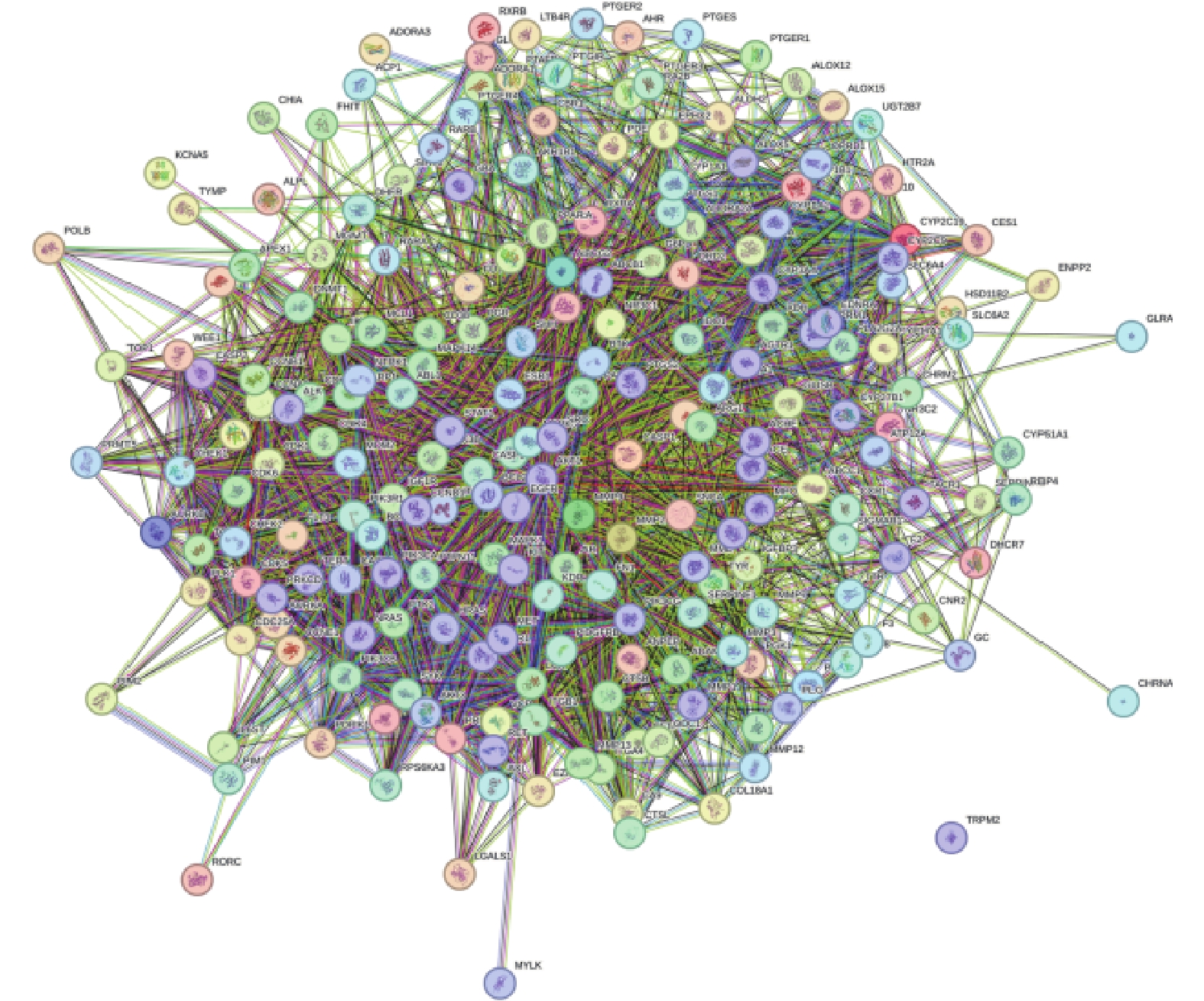
    • 将214个交集靶点上传至STRING 12.0数据库,构建PPI网络模型,该网络共有214个节点和3 451条边,平均节点度值为32.3,见图2

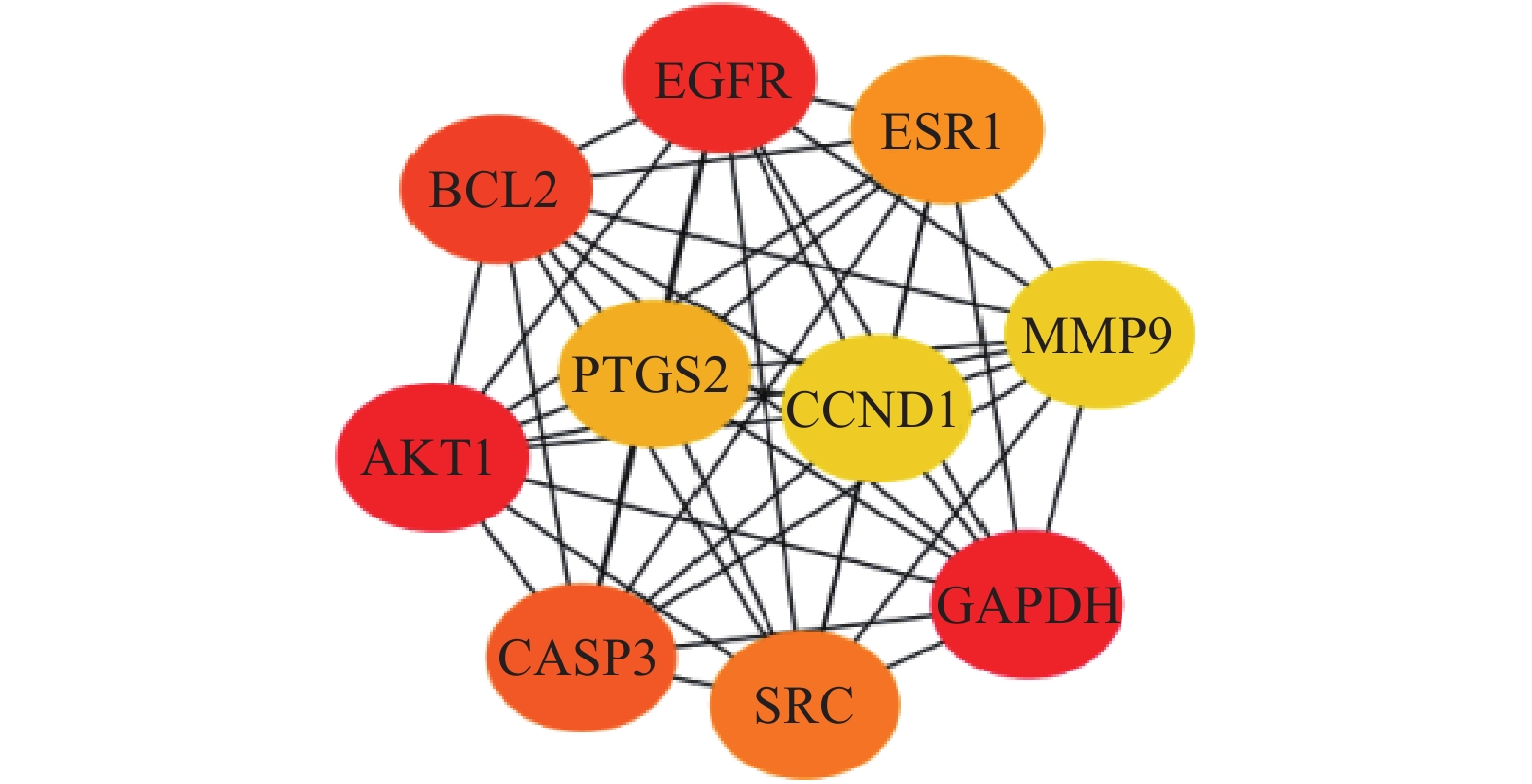
    • 利用Cytoscape 3.10.4内置插件CytoHubba,筛选出PPI网络度值前10位的核心靶点,见表3,核心靶点网络图见图3

      序号基因名称靶点蛋白质名称度值介数中心性
      1GAPDHGlyceraldehyde-3-phosphate dehydrogenase146.04 497.1
      2AKT1RAC-alpha serine/threonine-protein kinase137.03 157.3
      3EGFREpidermal growth factor receptor123.02 327.8
      4BCL2Apoptosis regulator Bcl-2116.01 354.7
      5CASP3Caspase-3110.0951.0
      6SRCProto-oncogene tyrosine-protein kinase Src109.03 486.2
      7ESR1Estrogen receptor104.01 469.5
      8PTGS2Prostaglandin G/H synthase 298.02 226.2
      9MMP9Matrix metalloproteinase-994.0860.8
      10CCND1G1/S-specific cyclin-D194.0883.5
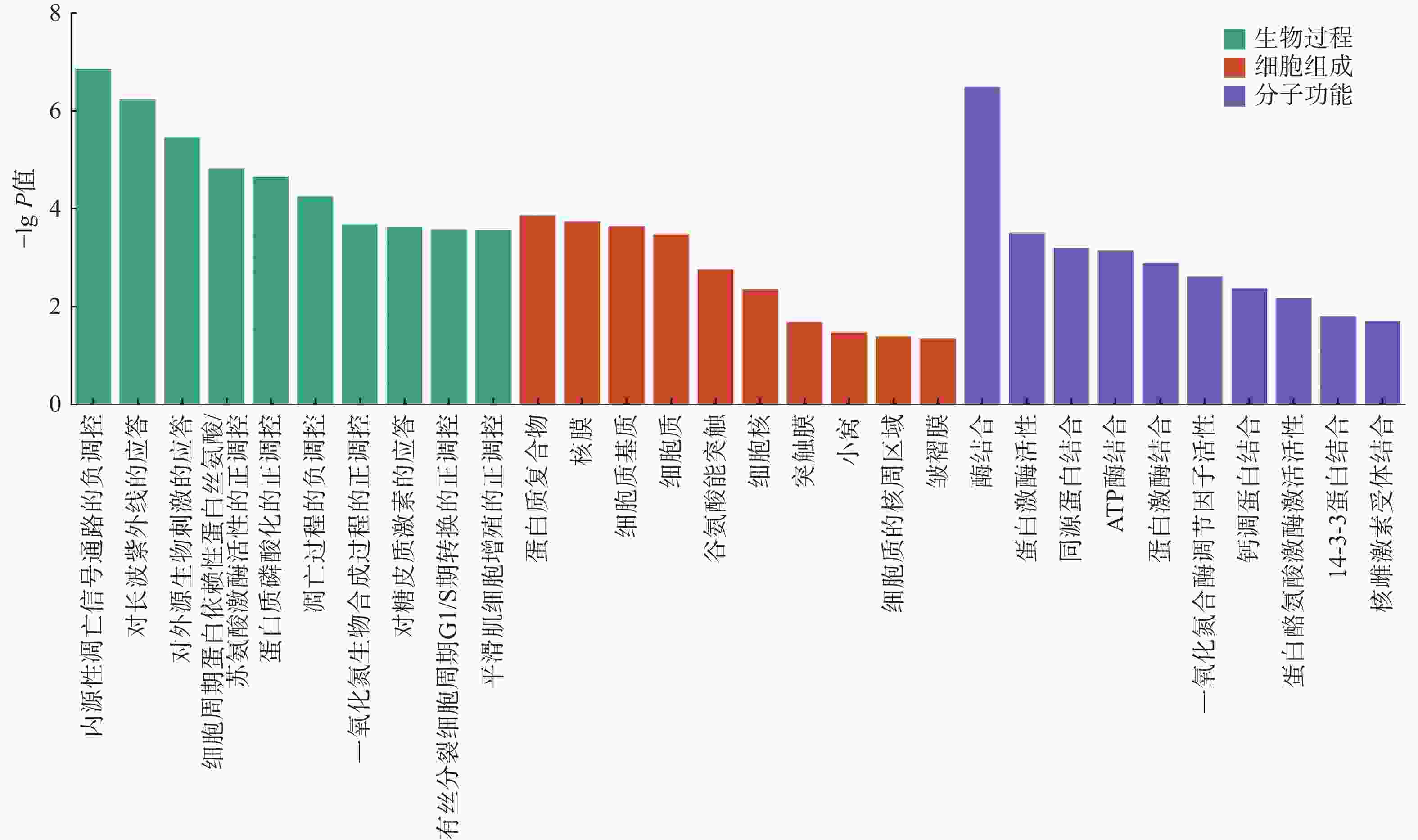
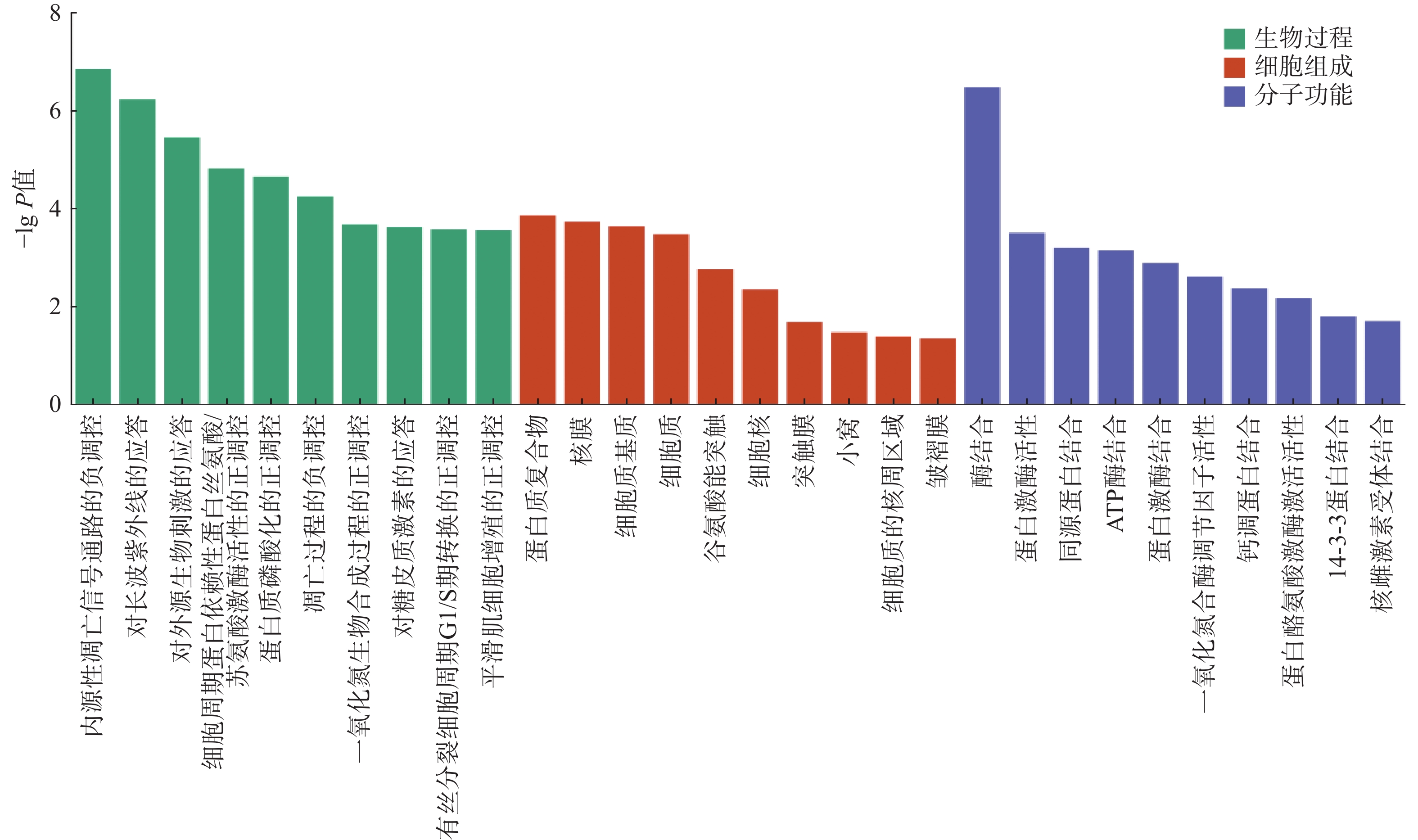
    • 本文利用DAVID数据库对10个核心靶点进行了基因注释分析,以P<0.05为标准,结果显示交集靶点参与内在凋亡信号通路的负调控(negative regulation of intrinsic apoptotic signaling pathway)、对UV-A的反应(response to UV-A)、对外源刺激的反应(response to xenobiotic stimulus)等79个生物过程,分布在含蛋白质的复合物(protein-containing complex)、核膜(nuclear membrane)、胞质溶胶(cytosol)等10个细胞成分,参与酶结合(enzyme binding)、蛋白激酶活性(protein kinase activity)、相同的蛋白质结合(identical protein binding)等13个分子功能,见图4

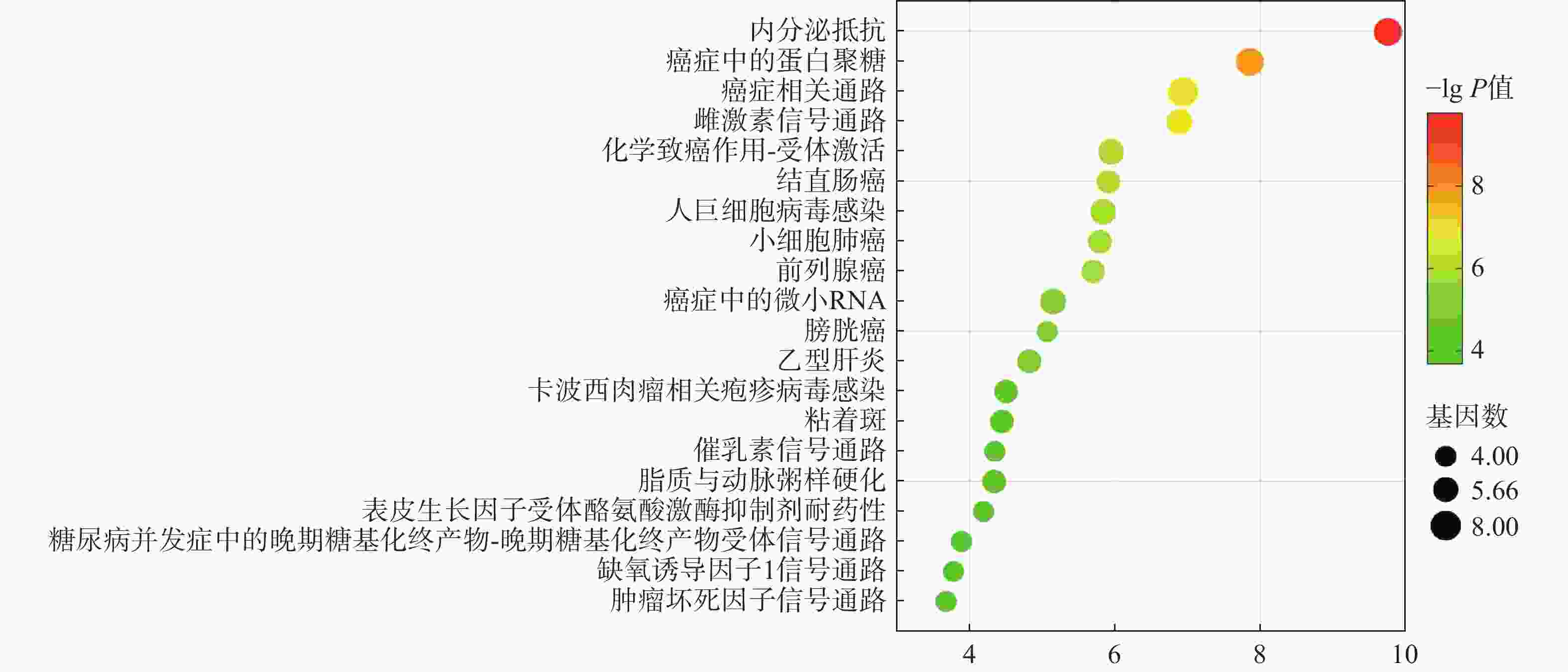
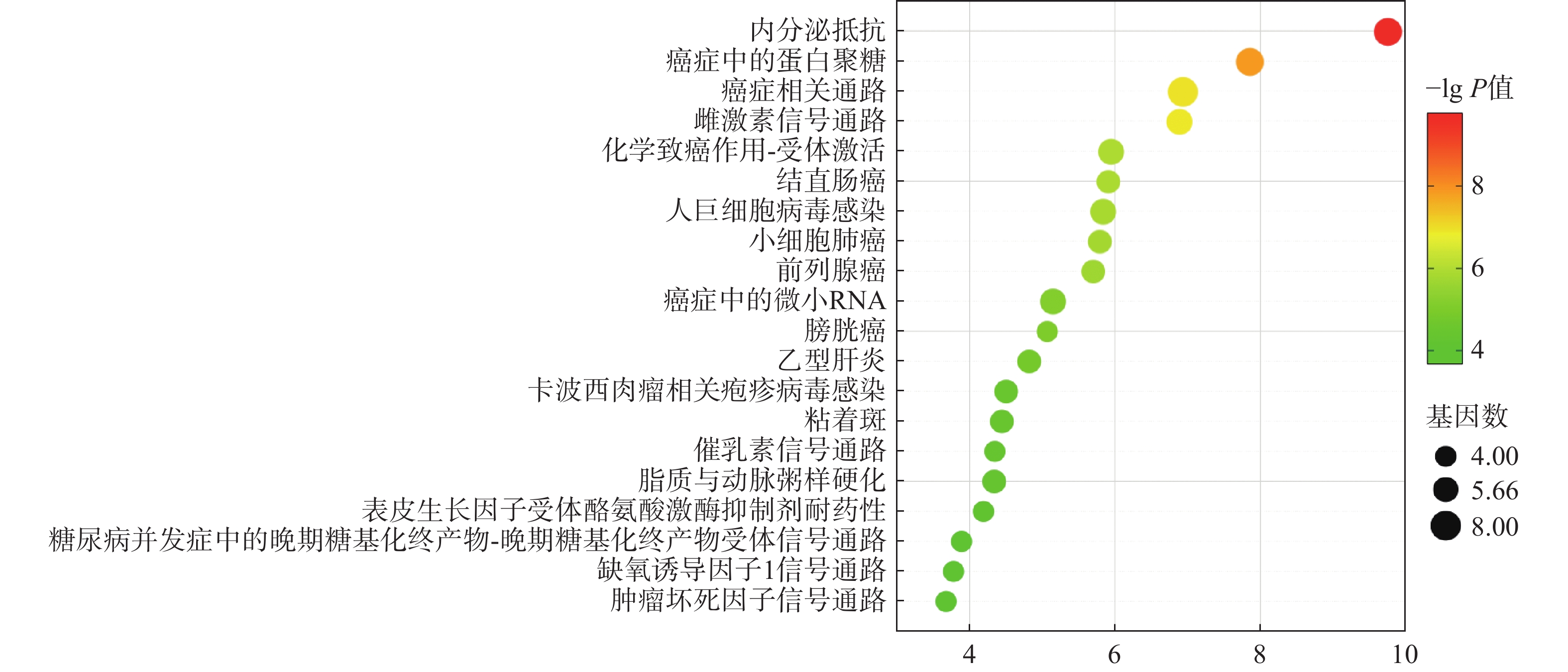
    • 利用DAVID数据库对10个核心靶点进行KEGG信号通路分析,以P<0.05为标准,共参与63条信号通路,筛选前20位信号通路,结果显示干预过程主要涉及雌激素信号通路(estrogen signaling pathway)、HIF-1 信号通路(HIF-1 signaling pathway)、TNF信号通路(TNF signaling pathway)等,见图5

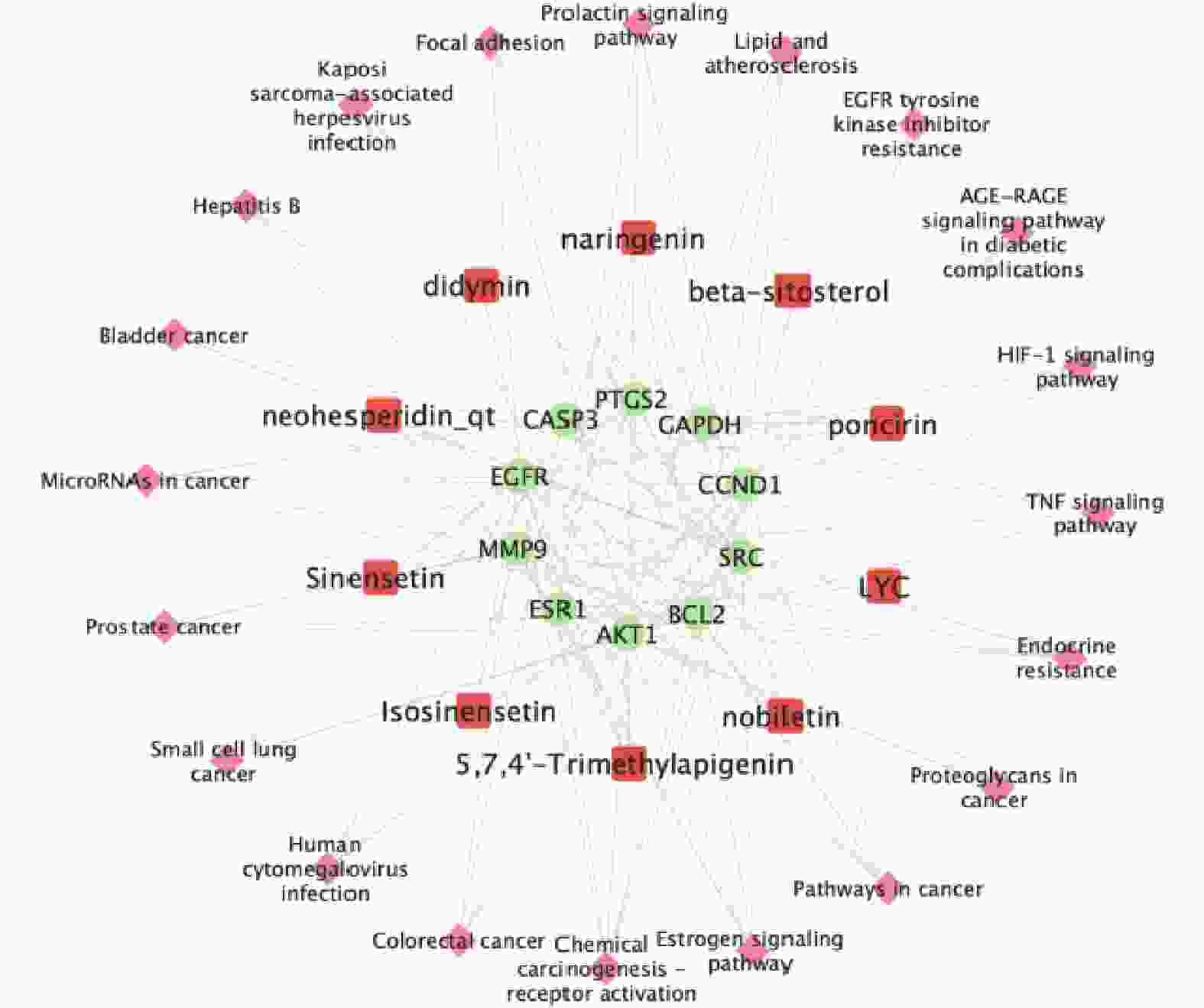
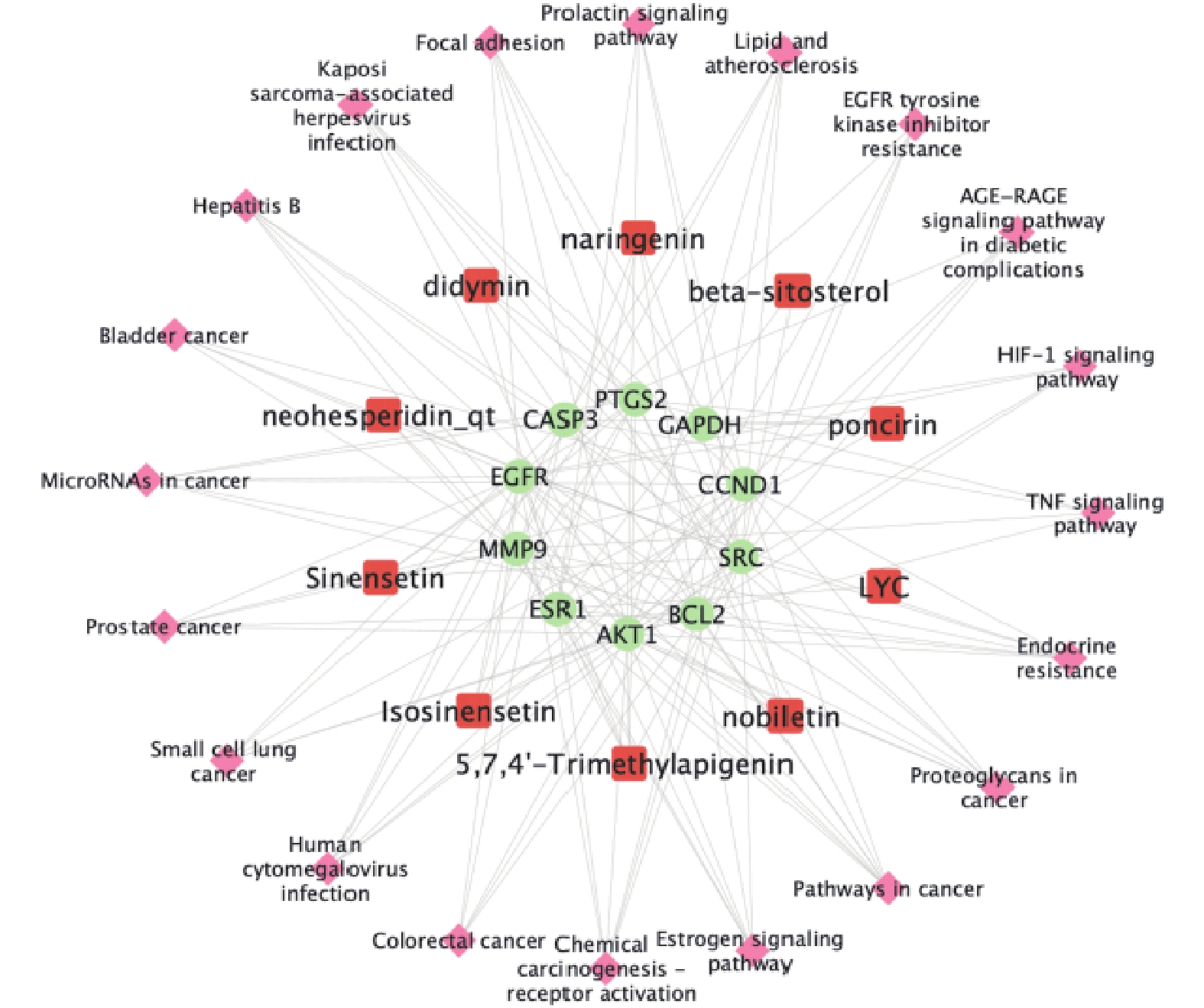
    • 利用Cytoscape 3.10.4构建活性成分-核心靶点-通路网络,更直观反映活性成分与核心靶点及通路间关系,该网络包含40个节点和144条边,可见化橘红活通过多靶点、多途径、多通路相互协调,共同发挥止咳化痰作用,初步阐释了化橘红止咳化痰的主要药效物质基础和作用机制,见图6

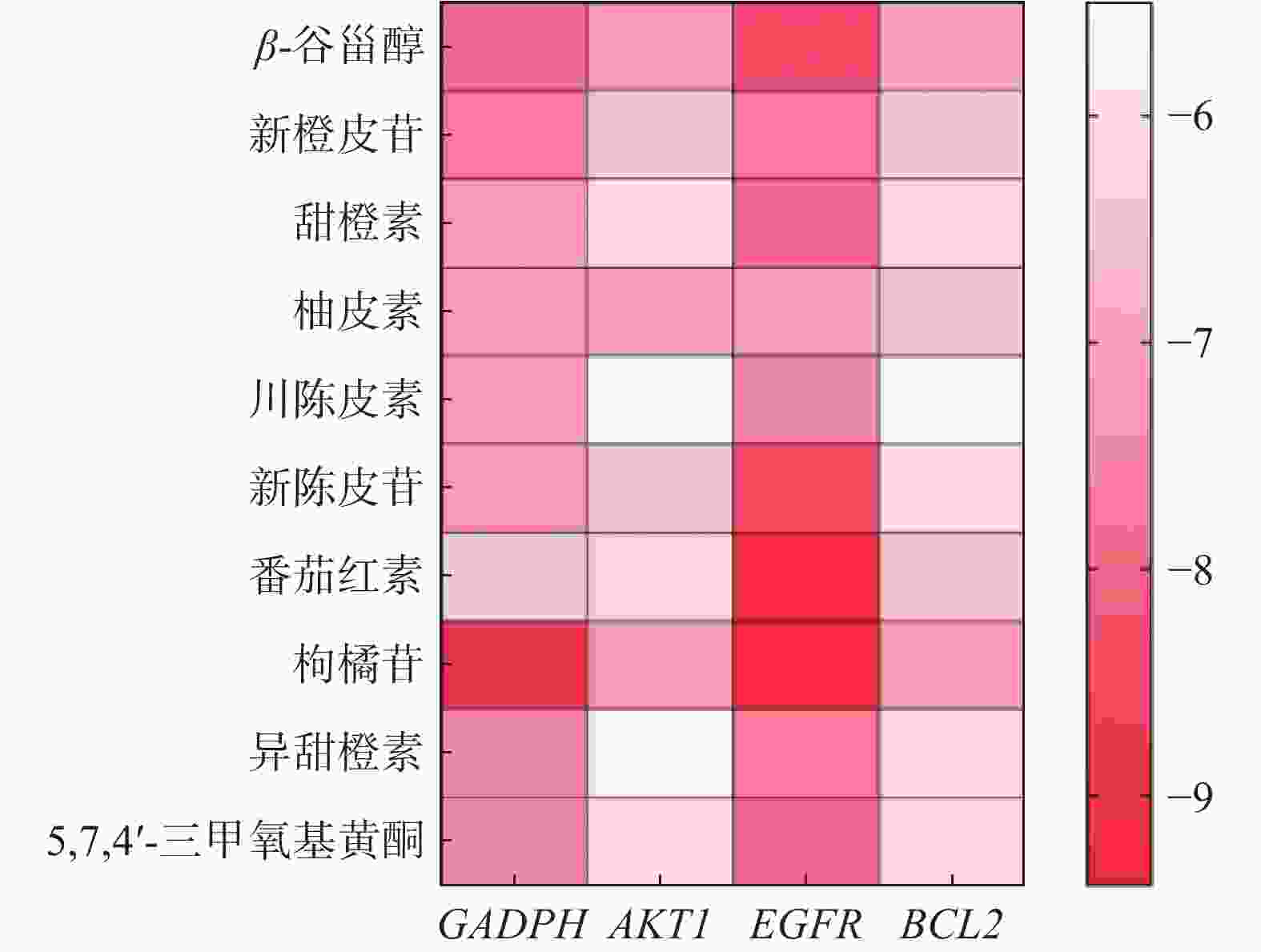
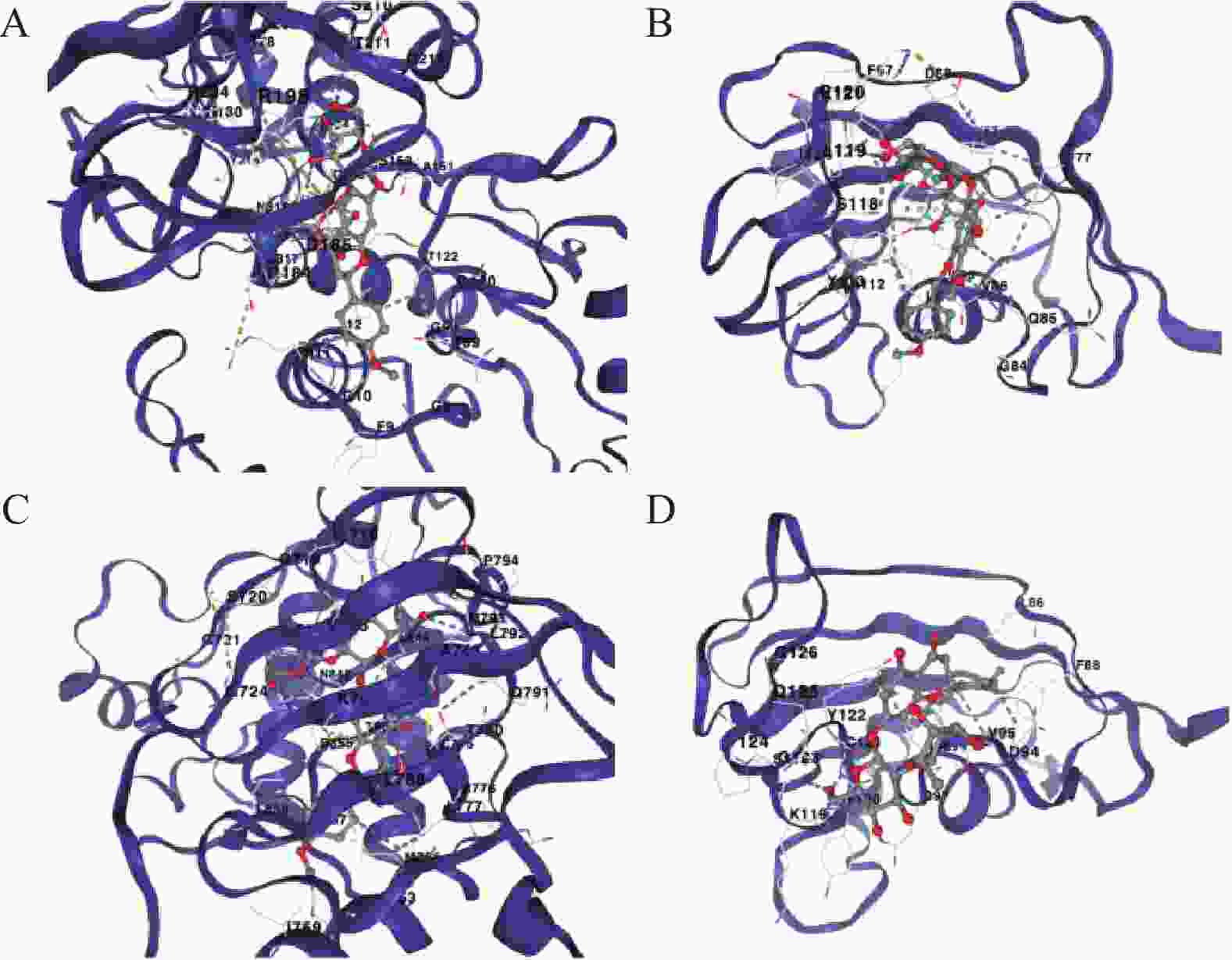
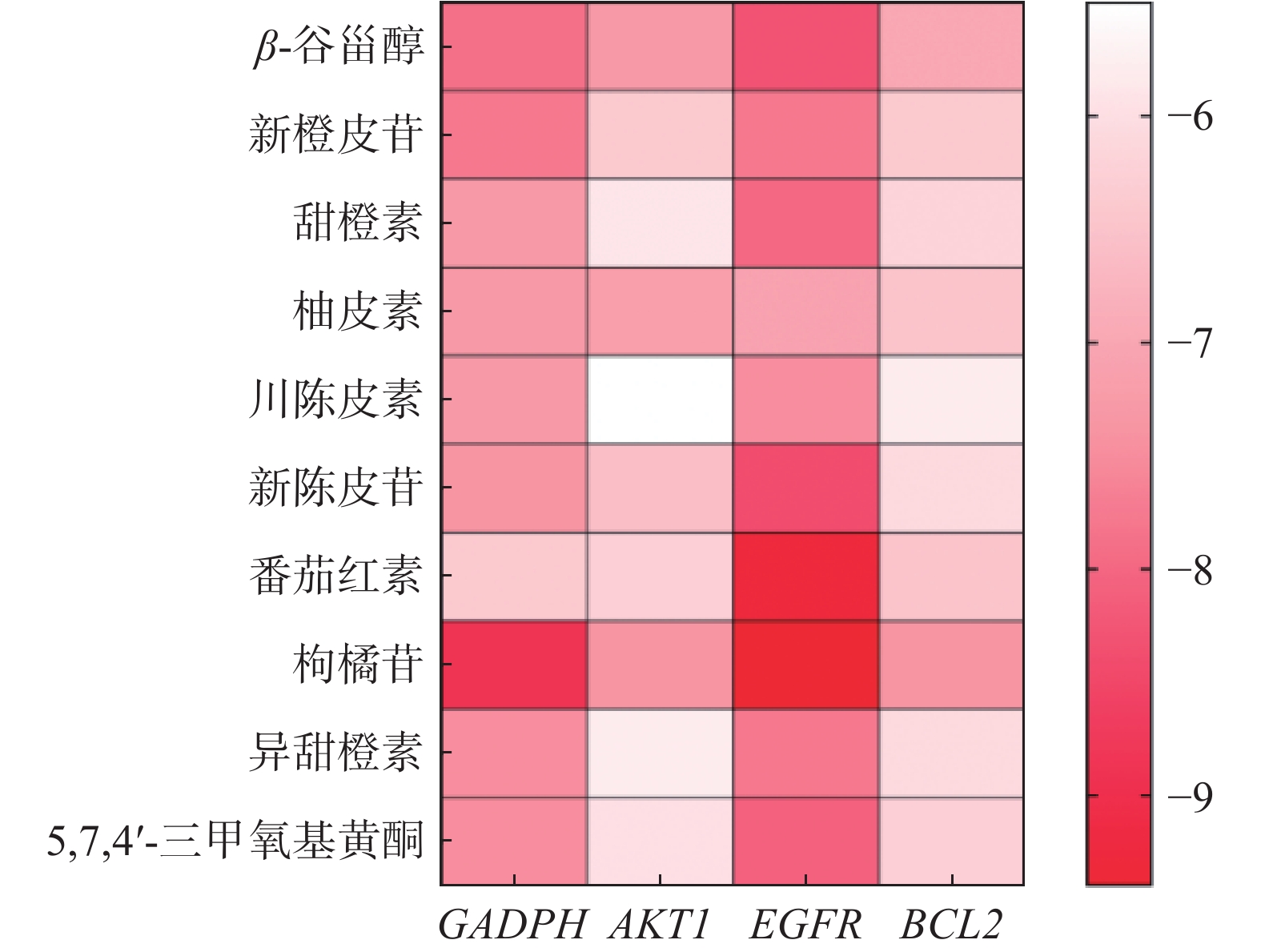
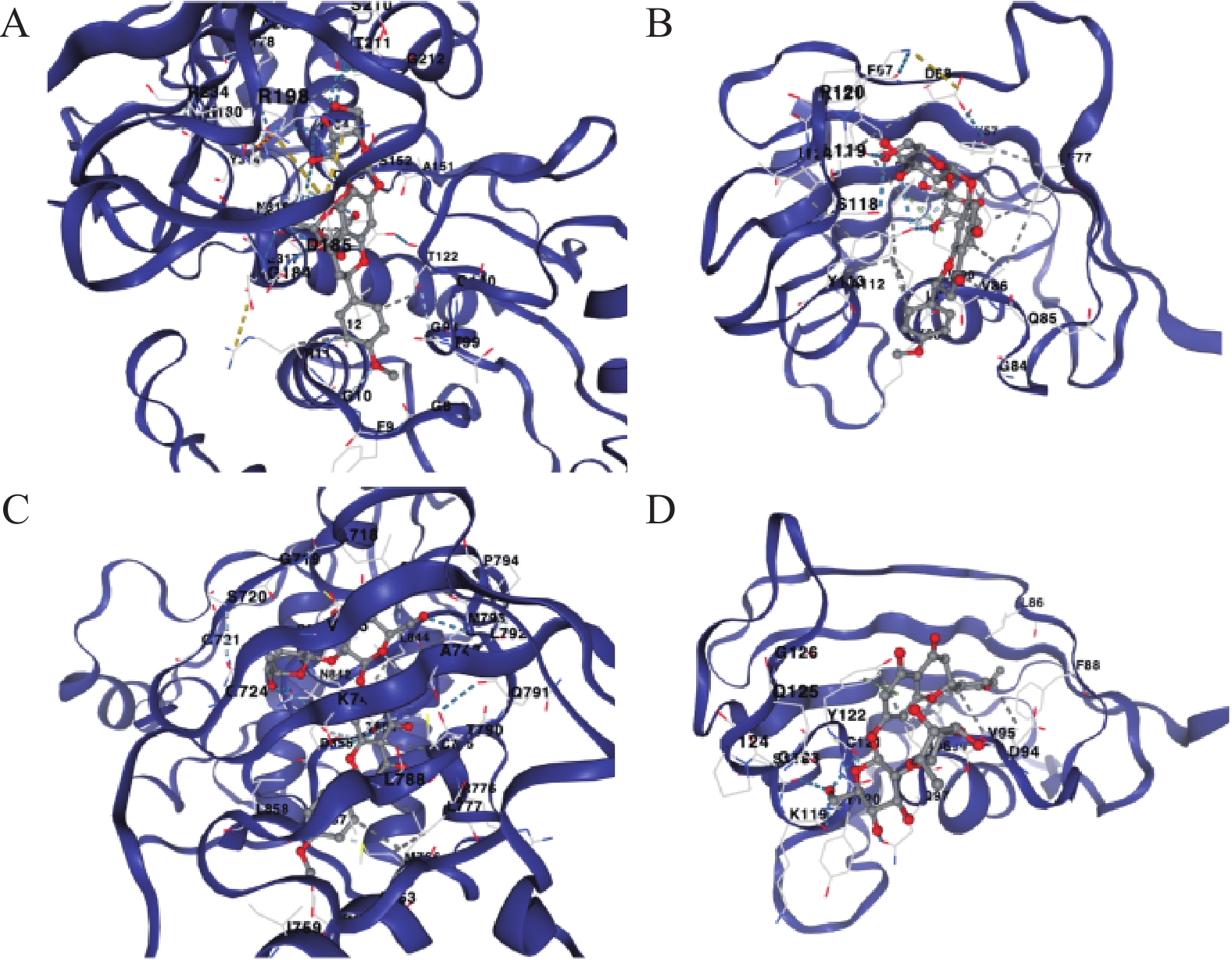
    • 将核心靶点排序居前4位的基因(GAPDHAKT1EGFRBCL2)分别与化橘红活性成分进行分子对接,配体和受体结合能越低,结合越稳定。分子对接结果显示核心靶点GAPDHAKT1EGFRBCL2与化橘红活性成分结合性较好,其中GADPH与化橘红活性成分枸橘苷结合能力最强,为−8.9 kJ/mol,AKT1与化橘红活性成分枸橘苷结合能力最强,为−7.4 kJ/mol,EGFR与化橘红活性成分枸橘苷结合能力最强,为−9.4 kJ/mol,BCL2与化橘红活性成分枸橘苷结合能力最强,为−7.4 kJ/mol,见图7。这表明化橘红活性成分能与核心靶点有效结合,通过调节靶点活性,进而调节相关信号通路,发挥止咳化痰作用。部分活性成分与核心靶点分子对接,见图8

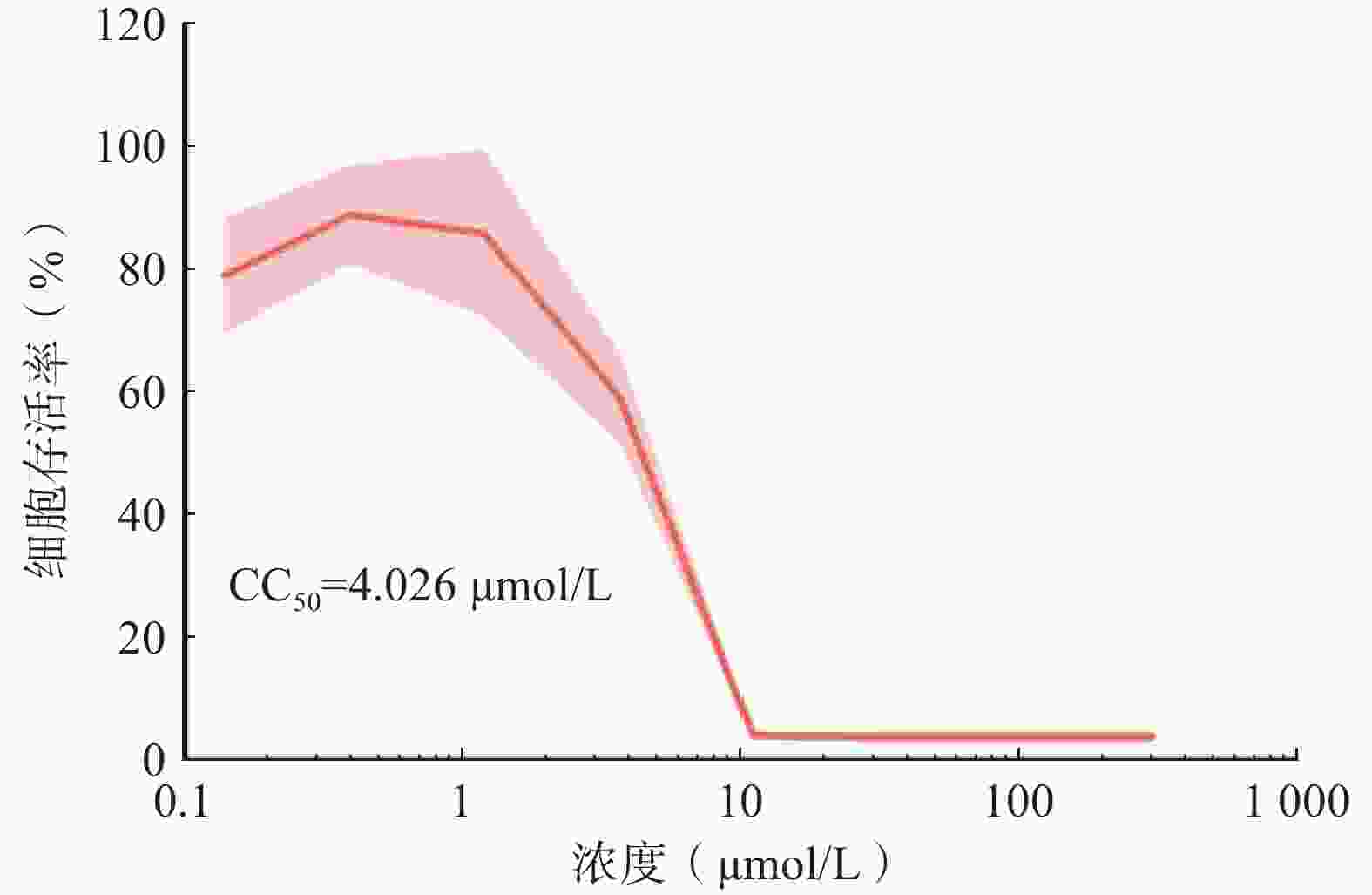
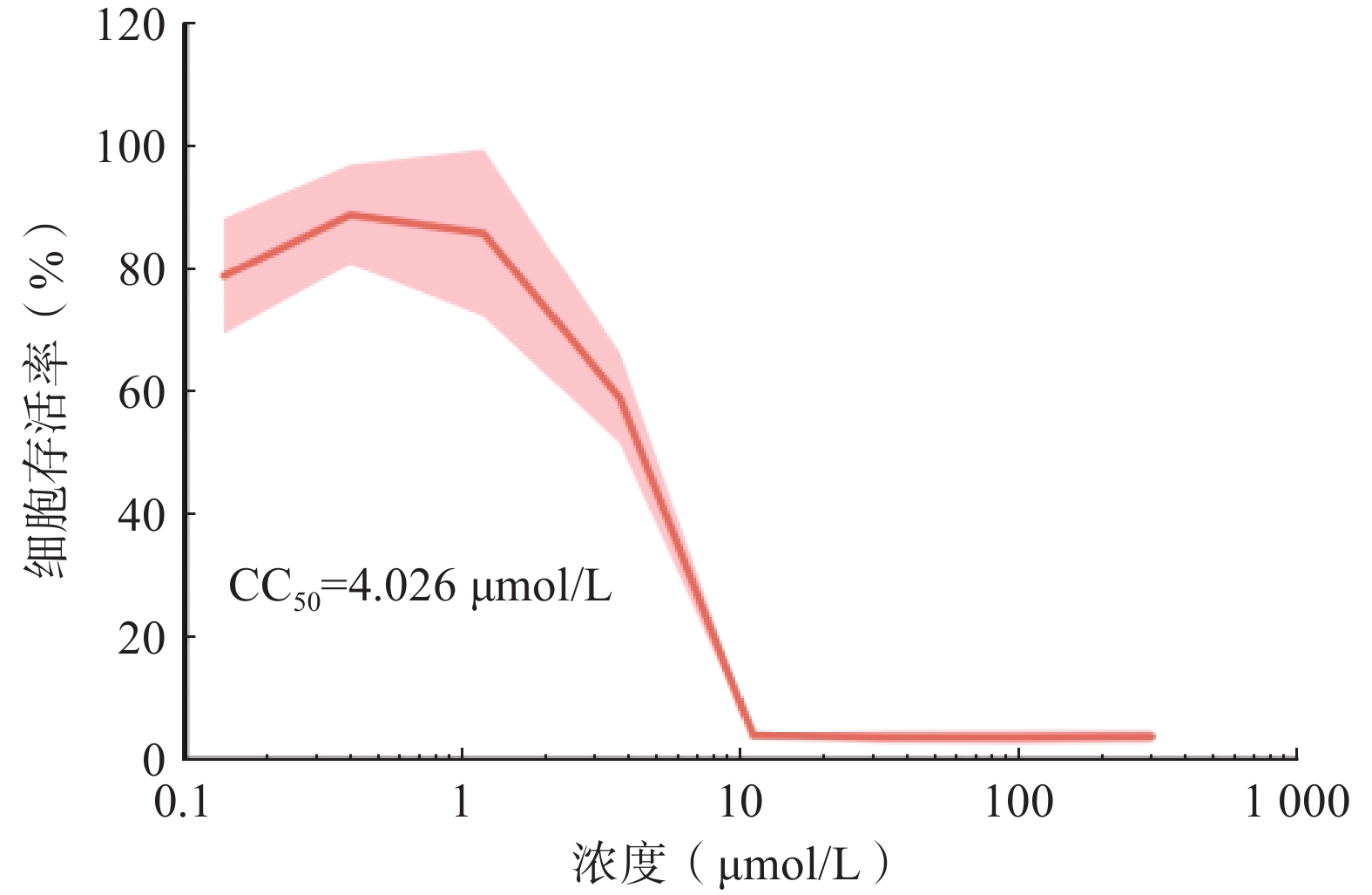
    • 实验结果表明,加入4.026 μmol/L的SO2衍生物时,细胞存活率为50%。确定建立BEAS-2B细胞模型条件为4 μmol/L SO2衍生物培养24 h,见图9

    • 与对照组相比,AMG9810在7.5~100 μmol/L、化橘红提取物在0.5 μg/ml~10 mg/ml浓度范围内对BEAS-2B细胞存活率无显著影响。AMG9810分别选择 5、50、100 μmol/L,以及化橘红提取物1、100 μg/ml、10 mg/ml,作用24 h,进行后续实验。

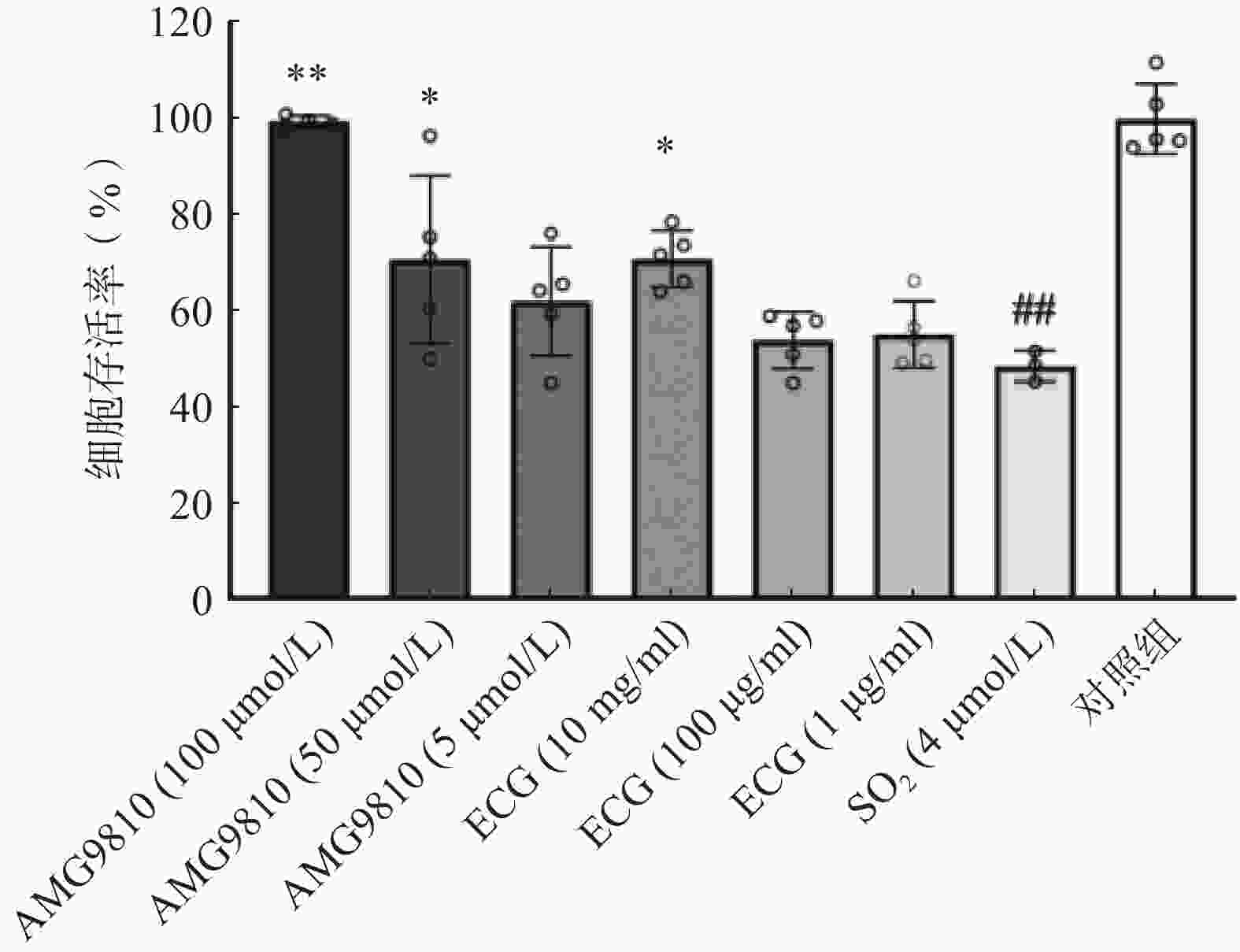
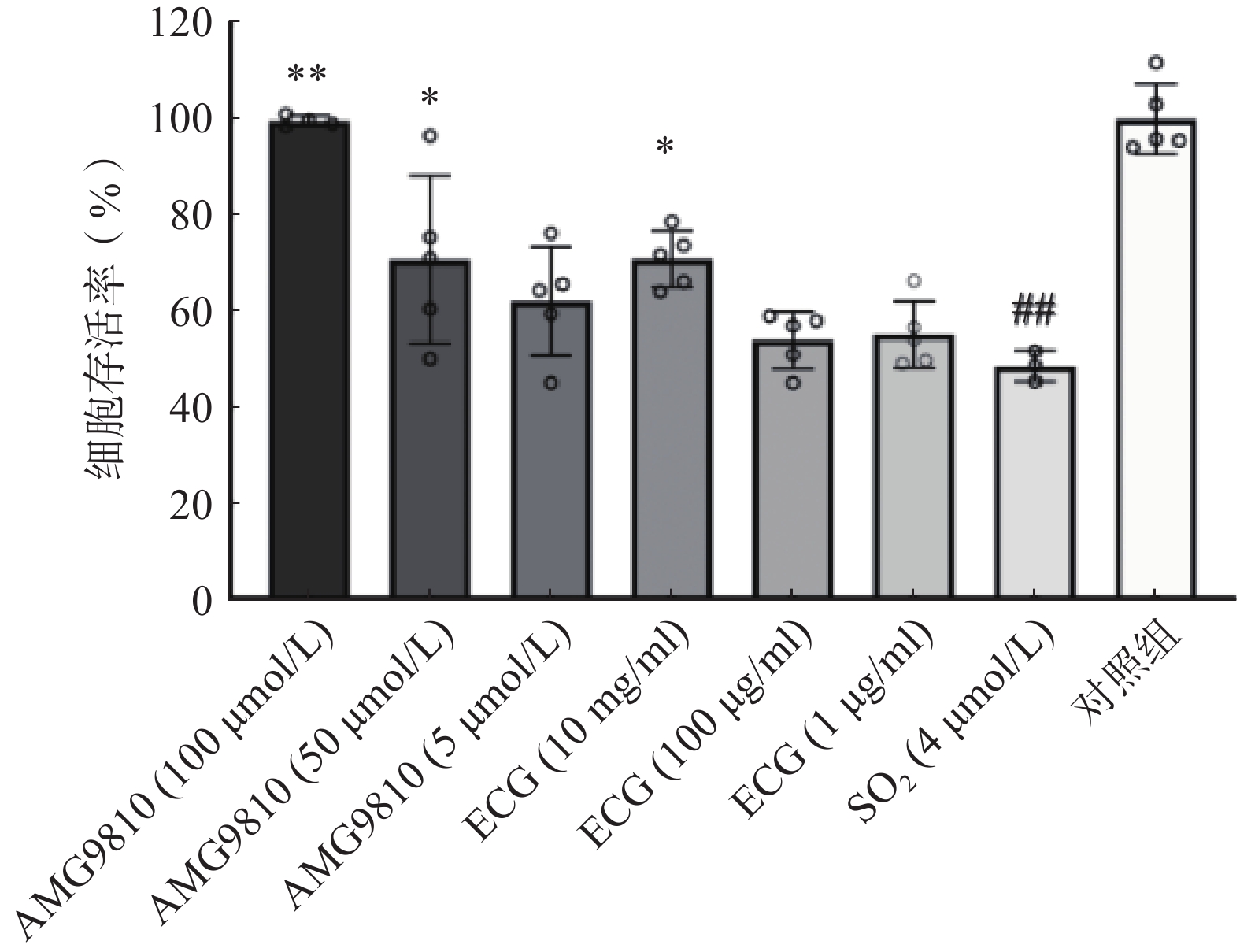
    • 与对照组相比,模型组细胞存活率显著降低(P<0.01),表明成功建立BEAS-2B细胞模型。与模型组相比,AMG9810各剂量组细胞存活率不同程度升高,其中,AMG9810 10 μmol/L和100 μmol/L组的细胞存活率显著提高(P<0.05),化橘红提取物各剂量组细胞存活率不同程度升高,其中,10 mg/ml化橘红提取物组细胞存活率显著升高(P<0.05),见图10

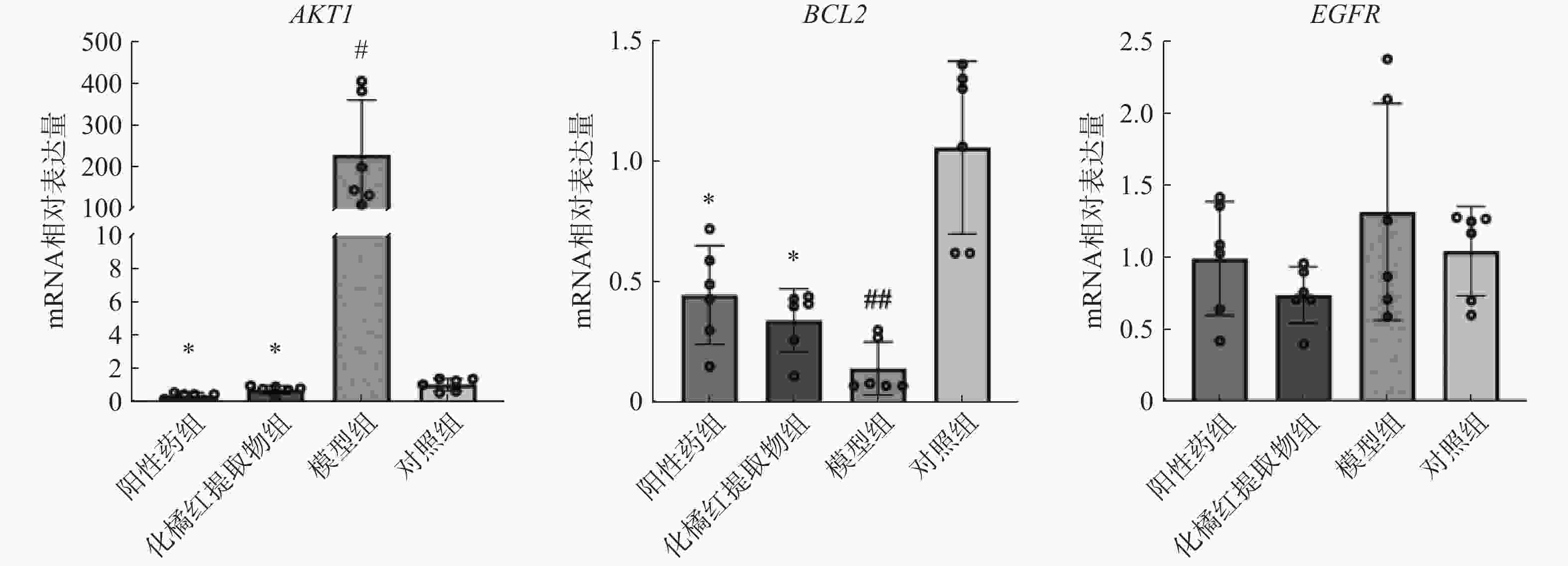
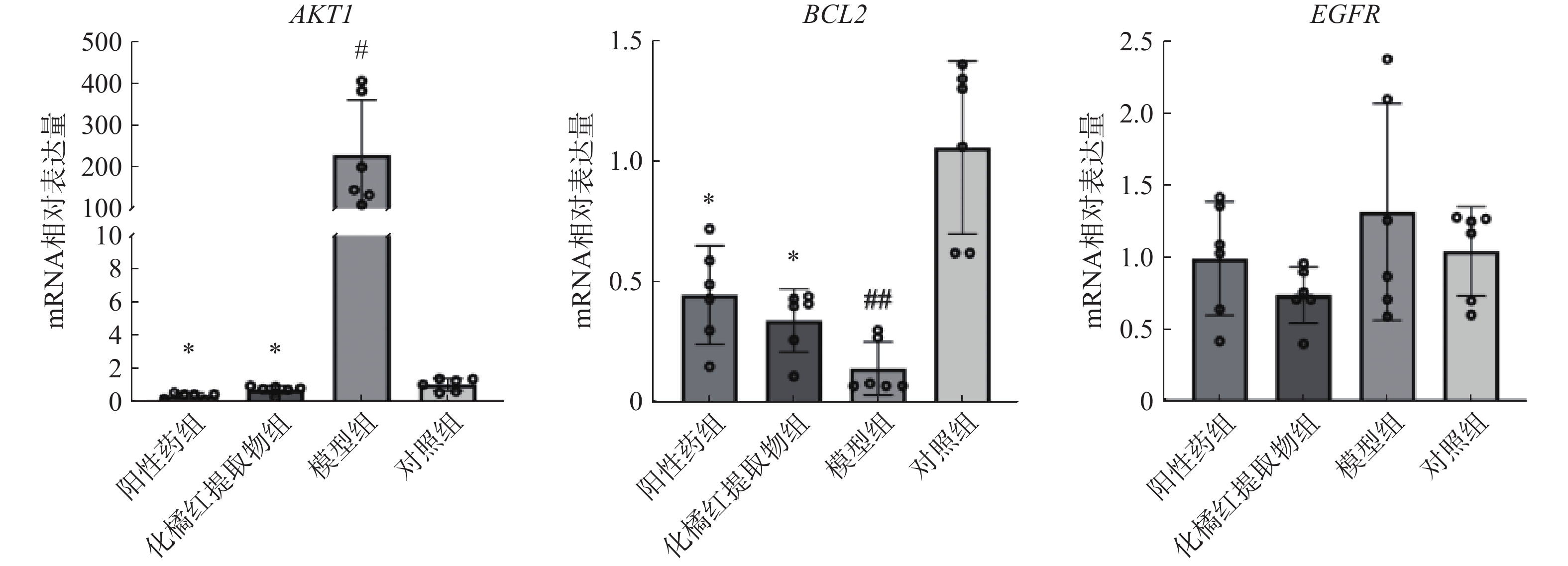
    • 与对照组相比,模型组细胞AKT1水平显著提高(P<0.05)、BCL2水平显著下降(P<0.01)、EGFR水平升高,但无明显变化。与模型组相比,阳性药组AKT1水平显著降低(P<0.05)、BCL2水平显著上升(P<0.05)、EGFR水平降低,但无明显变化;化橘红提取物组AKT1水平显著下降(P<0.05)、BCL2水平显著上升(P<0.05)、EGFR水平降低,但无明显变化。详见图11

    • 咳嗽作为机体重要的防御反射,其发生机制复杂且涉及多系统协同作用。中医理论认为,咳嗽的病因源于外邪侵袭肺系,导致肺气宣降失常,进而引发肺气上逆;虽病位主要责之于肺,但其病理过程亦与肝、脾、肾等脏腑功能失调密切相关[11]。化橘红作为我国四大南药之一,兼具抗炎、抗氧化及抑制细胞凋亡等多重药理活性,在肺病领域展现出显著疗效。临床实践证实,以化橘红为核心成分的橘红痰咳液对轻、中、重度咳嗽伴咯痰证状均具有良好治疗效果,且安全性良好,未见明显不良反应报道[12]

      本研究采用网络药理学方法系统解析化橘红止咳化痰的作用机制。通过构建“活性成分-靶点-通路”网络模型,共筛选出10种具有潜在药效的活性成分。具体而言,柚皮素(naringenin)可通过抑制PI3K/Akt/PTEN信号通路及NF-κB介导的炎症反应,发挥抗炎与抗氧化双重作用[13-14]。枸橘苷(poncirin)通过调节Th17/Treg细胞平衡,抑制NF-κB通路激活,有效减轻小鼠结肠炎症反应[15]。异橙黄酮(isosinensetin)与5,7,4'-三甲氧基黄酮(5,7,4'-Trimethylapigenin)同属黄酮类化合物,二者均可通过激活抗氧化酶系、抑制促炎细胞因子释放,展现抗菌、抗病毒及气道保护作用[16]。川陈皮素(nobiletin)具有抗炎、抗氧化作用,可以通过抑制NF-κB信号通路发挥抗炎活性,其抗氧化活性可抑制氧化应激反应,对氟尿嘧啶诱导的肺损伤具有保护作用[17]。β-谷甾醇(β-sitosterol)通过激活LXRs/ABCA1通路发挥抗炎效果,缓解LPS诱导的急性肺损伤[18]。Kan等研究显示,β-谷甾醇通过抑制FGFR1EGFR表达,下调PI3K/AKT/mTOR/CD1信号通路,从而抑制肿瘤细胞增殖、诱导凋亡和减少迁移,表现出抗癌潜力[19]。此外,化橘红活性成分柚皮素、β-谷甾醇可以通过激活糖皮质激素受体,进一步发挥抗炎作用[20-21]

      基于Cytoscape软件的拓扑学分析进一步揭示,GAPDHAKT1EGFRBCL2为化橘红止咳化痰的核心作用靶点。其中,GADPH是糖酵解的关键酶,在细胞中参与氧化应激等多种作用,最新研究显示,GADPH过表达促进肿瘤细胞生长和转移[22]AKT1广泛分布于肺组织,参与代谢、转录及翻译等关键细胞功能,并在炎症性疾病中发挥重要调控作用。研究显示,抑制AKT1表达可显著减少博来霉素诱导的小鼠肺泡巨噬细胞促炎细胞因子生成,进而阻断纤连蛋白沉积,对延缓肺纤维化进程具有积极意义[23]EGFR属于酪氨酸激酶受体家族成员,可以调节细胞增殖等功能,参与MAPK/ERK、PI3K/Akt等信号通路,其异常高表达与特发性肺纤维化关系密切[24]BCL2蛋白家族是调节线粒体凋亡途径的关键蛋白,可促进细胞存活,在间质性肺病炎症、凋亡和纤维化的发病机制中起着关键作用,BCL2在不同细胞类型中表达不同,在成纤维细胞中表达上升,抑制其表达有助于改善肺纤维化[25]。经LPS诱导后,在小鼠单核巨噬细胞炎症中观察到BCL2表达水平降低[26]。分子对接结果显示,化橘红活性成分与GAPDHAKT1EGFRBCL2结合活性较佳,表示化橘红活性成分与核心蛋白结合较稳定,可以发挥止咳化痰作用。细胞实验表明,化橘红提取物可以提高BEAS-2B细胞存活率,降低AKT1表达、升高BCL2表达,表明化橘红可以缓解细胞炎症反应,促进细胞存活,对改善炎症反应有一定作用。

      GO功能富集与KEGG通路分析表明,化橘红通过调控雌激素信号通路、HIF-1信号通路和TNF信号通路等多条信号通路发挥止咳化痰作用。雌激素信号通路参与调节肺部发育和功能,雌激素与其相应受体结合,通过ERβ/circ-TMX4/miR-622/CXCR4信号促进非小细胞肺癌细胞入侵[27],此外,研究显示雌激素还参与调节支气管平滑肌,雌激素受体高表达导致支气管收缩性增加,加重呼吸道疾病[28]。HIF信号通路是细胞对缺氧反应的重要调节通路,McClendon等发现HIF-1α在急性肺损伤后肺泡上皮细胞中被激活,并促进其增殖和扩散,加快肺修复[29]。TNF信号通路是细胞信号传导的关键途径之一,Lu等发现TNF-α在LPS诱导的急性肺损伤中高表达[30]。结果显示,化橘红可能通过干预TNF信号通路减轻炎症反应,通过HIF信号通路改善缺氧环境,通过雌激素信号通路调节支气管平滑肌扩张等多靶点、多通路的协同作用,实现对咳嗽病理过程的综合干预。

      综上,本研究表明化橘红可能通过靶向GAPDHAKT1EGFRBCL2等关键节点,调控雌激素信号通路、HIF-1信号通路和TNF信号通路等信号通路,发挥止咳化痰作用。细胞实验结果表明,化橘红提取物通过下调AKT1表达,上调BCL2表达,发挥抗炎、提升细胞存活率作用。

Reference (30)

Catalog

    /

    DownLoad:  Full-Size Img  PowerPoint
    Return
    Return